
I’m sick of cataloging this afternoon. So here are a few pictures from the past, none medical.
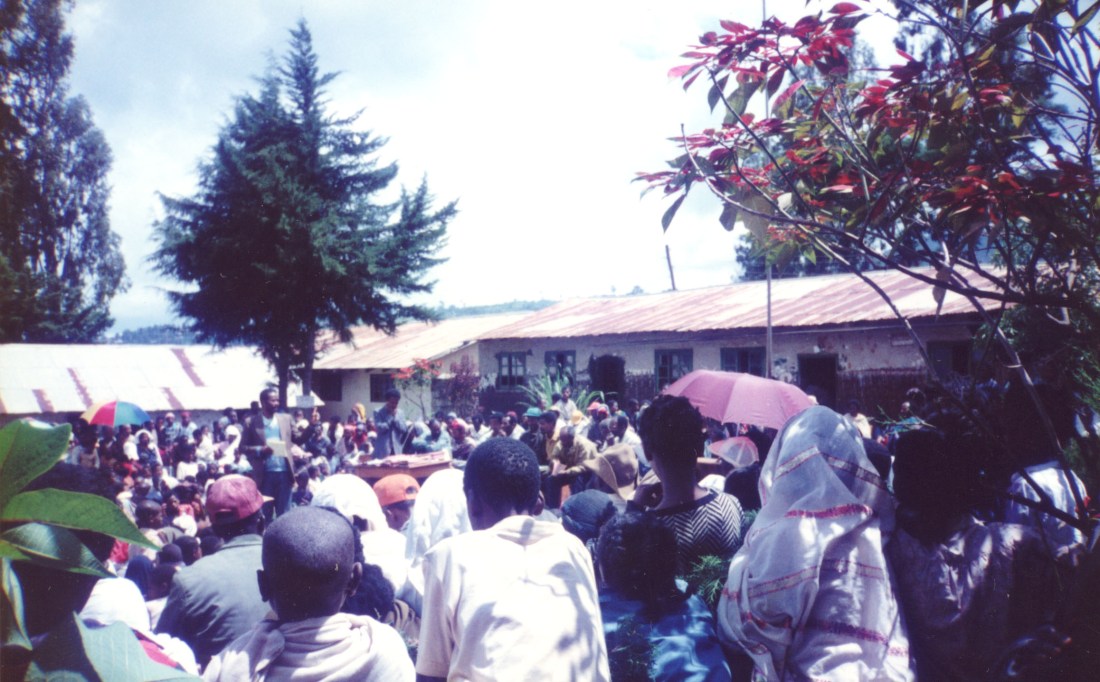


And so it goes on. But enough for one day.
Dominic Cartier
I’m sick of cataloging this afternoon. So here are a few pictures from the past, none medical.
And so it goes on. But enough for one day.
Dominic Cartier
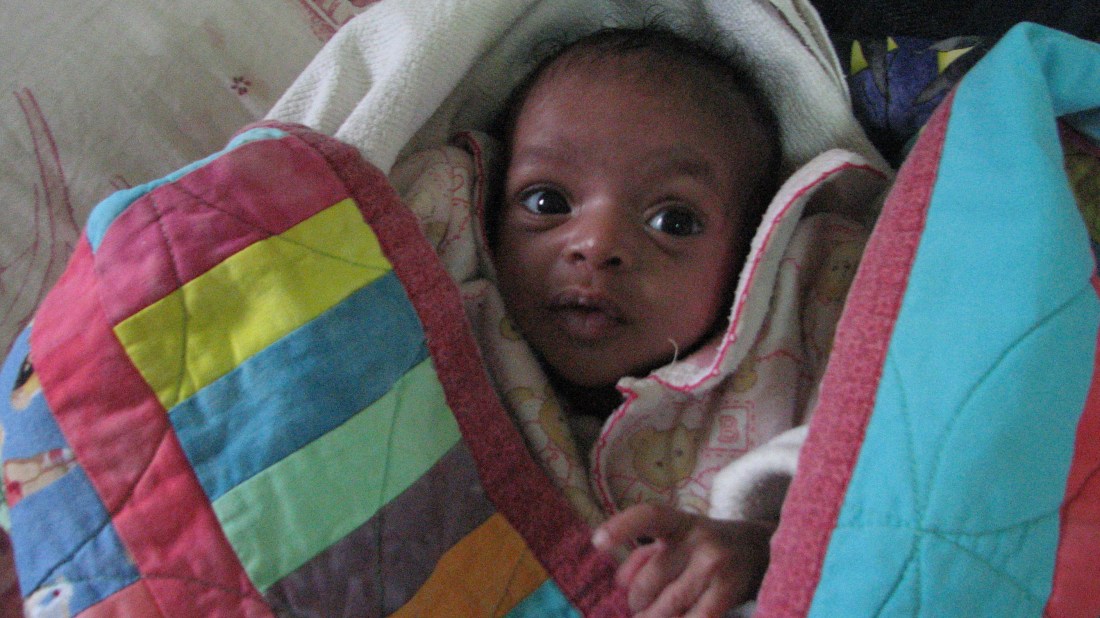
A baby girl is born. So what’s so amazing about that? We’ll call the girl Rahel which isn’t her real name. Her birth mother had just been left by her husband, and none of her family wanted her. She was an epileptic, and fell into a fire and was very seriously burned. She lost her left breast and had serious full thickness burns on her left side and down her left arm. She was pregnant and at term. She delivered Rahel the day after she was admitted to the hospital. The mother would have nothing to do with her, I think understandably in the circumstances. The mother was dreadfully ill and sadly weeks later died, after lots of treatment. There were no relatives around.
But the story is about Rahel. She was taken to the special care baby unit, where after a few days they rebelled and said she wasn’t a sick baby so she couldn’t stay there. So she was brought into her mother’s ward, my wife bought infant formula for her, but they rebelled for the same reasons. So we brought her to our house while we tried to work out a solution. We were in the middle of adopting our second Ethiopian son who was about 10 at the time. We all loved her but didn’t feel as if we could or would be allowed to adopt her. Our next door neighbours were Europeans, supervising the care of street kids whom they placed in willing local homes and financially supported the families to cover the cost of an extra child. Our neighbours knew English but their prime languages were different. Thus their household spoke four languages – their two home country languages (very different), English and Amharic, the common language of the local populous. They already had three boys of their own but after some consideration decided they would like to adopt her.
My wife, although she loved her very much felt that we should not even try to adopt her. I agreed. So when they decided to take her we were sad/glad to let them have her to see how the boys accepted her. They loved her dearly.
Then one after the other the three boys came down in series with chickenpox. So for the baby’s sake she came back to live with us until the risk of her getting the disease was over. Many times a day the non-infected boys would come to our door, accusing us of stealing her. They wanted her back.
During this time we went to a town a couple of hundred kilometres away to visit our first adopted Ethiopian, who was back in the country courting a young lady who is now his wife and the mother of their two children.  We were sitting in a little restaurant with our two boys and little Rahel. At a nearby table were sitting two well dressed men. They were talking in the tribal language of our son who overheard and understood their conversation. Apparently there had recently been several cases of foreigners stealing babies to sell on the black market. They were policemen. They were deciding as to whether or not they should arrest us. Our son went over and spoke with them, explaining our situation. Then we joined them and it was all sorted out.
Chickenpox doesn’t last for ever and the family joyfully took Rahel back. The boys forgave us for stealing her! But then the birth mother’s relatives, who hadn’t come to the hospital, as soon as a legal adoption process began, came forward. They didn’t want her, but surely she was worth something. All I know is that after a bit of trouble they were able to adopt her.
The last time I saw her one of our Australian sons was with us. He knew one of the parent’s language. She sat on his knee and spoke with him in that language for about half an hour.  She spoke with us fluently in English. She also knew her other parent’s language and apparently knows Amharic well. At six she was fluent in four languages. Truly the little girl is well and truly born! The parents have since had another child of their own. A little girl.
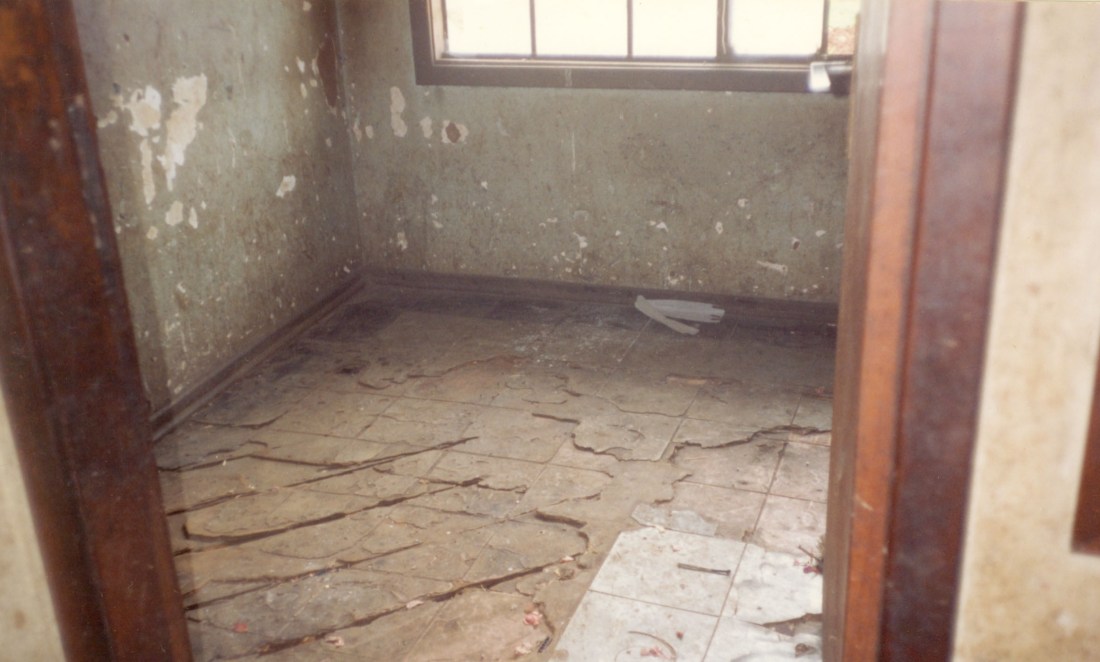
You might not like the pictures below the ‘more’ line. They are of the birth mother’s burns.

Having a family is exciting! Maybe not all beer & skittles but fantastic!
Modern obstetric care in the ‘so called’ first world countries is on the whole excellent. In quoting statistics one must remember the old adage ‘lies, damn lies and statistics’. The internet tells us that in the best countries the maternal mortality rate is 2/100,000 live births. In Ethiopia it is 421/100,000 live births, and I’m sure that it was worse 50 years ago. Around the world there is apparently an obstetric tragedy every 11 seconds. I cannot find figures for maternal deaths when the baby is born dead. That is the world I entered in 1968. This doesn’t include those who live with vesico-vaginal fistulae, of which there are 9,000 new cases annually in Ethiopia (quoted by the late Dr. Catherine Hamlin); nor those who survive ruptured uterus. I’m sure many of these died before they reached a hospital where they could be operated on.
I took out the figures in Soddo (my second long stay in Ethiopia) over a year period and we had a 95% survival rate of those who reached hospital alive. I had reopened the hospital in Soddo in 1993 after the country was freed from the communist era. I was the only surgeon there. I was on call 24/7. After a while we had an obstetrician there who did the day O&G work and was on call at night every second week for obstetric emergencies. But initially I did them all , and later out-of-hours cases every second week. I was also called in to deal with the situation if there was also a ruptured bladder, which occurs in about 10% of cases.
I shall only mention one case here, as I know medicine isn’t everyone’s ‘cup of tea’. My children say they were brought up on such things around the tea table.
In the countryside antenatal care was almost non existent. We ran such a clinic, but few attended and everyone was so busy we didn’t chase things up as hard as we ideally should have done. Most babies were delivered at home. People didn’t come to the hospital until things were obviously seriously wrong. If you lived, for instance, 50km from the hospital, for the majority, there were neither ambulances nor roads so they had to be carried on stretchers over mountainous tracks and crossing waterways. People were frightened to travel at night; and it took, I am told, above 20 people to carry the patient, sharing the work; so it is not surprising that people arrived late.
My first case of ruptured uterus came within a few days of my arriving on my first time in Ethiopia. I was the only doctor in the place. The story apparently was that the labour made no progress, so the native healer tried to do what we call an internal podalic version. In other words by putting his/her hand inside the uterus they intended to turn the baby to get the feet at the bottom so that they could have something to hold onto to attempt to pull the baby out. I don’t know how but whoever it was managed to tear up the front of the vagina and uterus as well as the back of the bladder from top to bottom, and they still could not deliver the baby. The patient obviously rapidly became much sicker and she was brought into the hospital. The baby was dead, but I repaired the long internal tears and she recovered.

Unfortunately she developed a small fistula for which she was sent to the ‘Hospital by the River’ in Addis. She did well and was later delivered of a healthy child. I’m not sure where she fits into the statistics. Later when I was met with both a bladder as well as a uterine tear I used to bring down some mobilised omentum to separate the uterus and the bladder.
Over my time in Ethiopia I’ve worked in a number of Ethiopian government or University hospitals. I’ve had periods between two and five years over the time that I’ve been there, and for shorter periods in three others. Each morning in all of them it was seen as important to discuss the previous day’s admissions and operations.
A number of medical schools were suddenly started when the government decided they needed more doctors. There are over 20 at the moment, but remember the country’s population is now said to be 105 million. They didn’t have adequate qualified people to teach in any department or even adequate hospital facilities, at least in Arba Mintch.
Just as students began their clinical years of training in Arba Mintch, I transferred from Jimma University to Arba Mintch. I was paid by the University but, added to my University teaching responsibilities, I was expected to be the major surgeon at the hospital.
These, previously described, morning meetings were certainly held for the surgical department in Arba Mintch. I’m not sure about what happened in the other departments. Senior staff, post graduate trainees, interns and students were all meant to attend. In the established universities, where there had been trainees and students for a much longer period there were already buildings appropriate to the needs ; but this was not so in Arba Mintch. In Arba Mintch the University did not have an attached University hospital, so the students were sent to the Government Hospital, which was not given a grant to provide buildings for the students’ needs.
Initially we had 40 students per year, but by the time I left there were 170 per year. There were certain requirements laid down in the University laws which each student had to obey. For instance they had to attend 95% of all lectures and be signed in to have watched 20 operations. Apart from the first year of clinical attachment (4th year) we had students with us all the time as at that time there was no fifth year group. When the numbers were small we had the younger group half the academic year and the other half year we had the more senior class. Although they were with us full time for their attachment we didn’t have them all the time as they had to attend other departments as well. But at the end, because of the increase in numbers, in order to keep groups at a manageable size we had groups from both years all the time time.

For our morning meeting the expected attendance was – 3 surgeons; 2 or occasionally 3 post graduate students; 4 interns and up to about 65 students. The shed which we were given had no ceiling, old chairs, without enough for the people and no room for any more. The shed was about 10m by 7m. It is easy to imagine how crowded it was. So, as fortunately most were pretty slim, we could sit two per chair for some of them. I think some of them enjoyed that! We three surgeons had a general hospital to run, as well as the University department to run. In addition we were involved in the teaching programs for nurses, public health workers, anaesthetic students, and a course which tried to teach health assistants basic surgical procedures. Of course there were as well exams to be set and marked. We divided the numbers and apart from the morning meetings, which all had to attend, put a third under the wings of each surgeon. Not, of course, that I’m complaining or that I thought it ridiculous!!
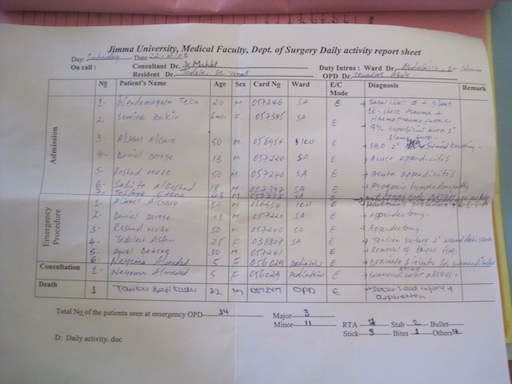
The morning meetings lasted about an hour, then one surgeon had a clinical teaching ward round for his third of the students; followed by a ward round for the interns and nurses of the 60 or so patients in the surgical wards. One of the other surgeons was in the operating room. He had his third of the students with him. The third surgeon was in referral clinic with his third of the students.
Dominic Cartier
PS I have opened a second blog under my real name and it deals in a bit more depth and with a few more gory pictures with some of my unusual problems. It is called Medical Memoirs at hicksmedical.wordpress.com
For many years the rulers of Ethiopia were from the Amhara tribe. Their religion is orthodox Christianity and they changed other tribal names of towns and areas to suit their desires, often to Biblical names. With the several changes of government over the last nearly 50 years many names have been reversed to their former names and Nazret (Nazareth) is again Adama. (The Oromos use a lot of doubling of letters to show how long a letter is to sound. They spell it Adaamaa). Is that of significance to this post? Well, yes it is. With the rise of tribalism, local people were put into positions which had previously been filled with Amharas, that is members of the then ruling tribe – not that they either were always a perfect fit for their posting. The replacements were not always well qualified. Thus the CEO of the Nazret hospital was now from the Oromo tribe. The young surgeon who wanted me to come was an Amhara. The Oromos are an Islamic tribe in the main. So when I was brought before him, the question was why he should allow this foreigner into his hospital at the request of an Amhara. There was not open hostility but below the surface suspicion.
My friend had told me that the boss had had several unsuccessful attempts to have a large umbilical hernia repaired. The hernia was visibly bulging through his shirt. So, somehow or other, it became the conversation piece. Eventually I persuaded him , if I could get a nylon mesh imported from Australia, to allow me to repair the hernia again. I promised him a 98% success rate. He agreed, and I was allowed ‘in’ to help my friend. His operation went well.
Note – in fact promising 98% sounds good but for each individual the outcome of a complication is either zero or a hundred percent. You get trouble or you don’t. He didn’t, so everything was okay for me after that. He was a happy, now cooperative, customer.
In fact it hadn’t been easy for me to make the decision to go there. Prior to meeting the CEO my wife and I had gone down, on a public holiday afternoon, to inspect what was involved. The wards were much like most Ethiopian hospitals; the surgeon was obviously trying his hardest without a lot of administrative cooperation. Not that they were against him but they had no real understanding of how to run a hospital.
But, as a surgeon, I was particularly interested in what the operating rooms were like. And seeing what we saw it was a hard choice to agree to work in them. There had been a procedure done the night before. The room had not been cleaned up; there was dirty linen on the floor and a considerable amount of blood about. A window was broken and there were flies feasting on the tasty morsels which they could smell and easily find. So in choosing to go I undertook to do and to get done quite a bit before my first operating list.

The school at which I taught part-time Because of Bilingual Canada had a rule that the year 10 students had to have a civic experience in the community for a couple of days during the school year. That year I bought some materials, and the students with the day workers from the school all came down and the windows and screens repaired, a decent setup for pre-operation scrubs put in place, the OR complex was painted and an emu parade performed over the hospital grounds to clean up the very messy area. Thank you, school.
Adama has a population of about 500,000 and an elevation of just over 1,700 metres (nearly 6000 feet).
Dominic Cartier
 Heated Stew