A brush with cholera

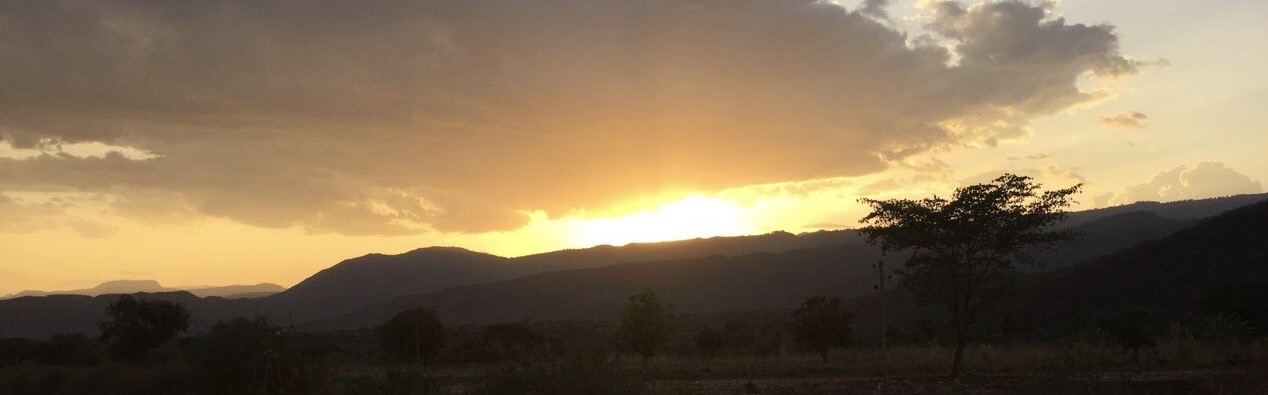
African sunset

I have in my blog An introduction to Life in Africa talked about my experience of arriving in Africa with a cholera vaccination one day over the 6 months protection promised, that is out-of-date by one day. I don’t think that I’ve had an injection for cholera since, rather relying on hygiene. The vibrio which causes cholera is present in the faeces of a sufferer and either spread by direct inoculation on soiled objects (eg hands or flies) or drinking water with infected faecal material in it.

Thus toilet paper, hand washing and boiling or sterilising affected water are the main protective mechanisms.

On the other hand without toilets or clean running water spread is rapid in developing countries.

People defecate near a water supply (eg creek), some faeces may spill into the creek or people wash their hands or bodies in the water. Further down the waterway someone drinks and ‘boom’.

Cholera gives extremely severe diarrhoea and a patient can die within 12 hours from dehydration.

Our home and hospital water supply was from the local creek.

As a medical service we were inundated with cases.

We set up 2 extra ‘hospitals’ one by ‘acquiring without consent’ a newly built un-occupied house in a village from which 14 people had died during the day before we set this temporary ‘hospital’ up. It was much bigger and better than the surrounding kraals with 5 rooms. We had to deal with the owner a few days later! The people were so terrified that they refused to bury their dead and left them out to be eaten by the hyenas. There we also set up a vaccination program under the shade of a huge tree not far away from the village. In this house/hospital patients lay on the floor as we had no beds and their bowel actions were handled by bed pans. The nurse and helpers who ran it deserved gold medals! No one died there, very serious cases were transferred to our major hospital. There are special cholera beds with holes under the buttocks with canvas funnels below to collect the massive diarrhoea in largish containers. We had none of these in either hospital so there was much work with very frequently used bedpans.
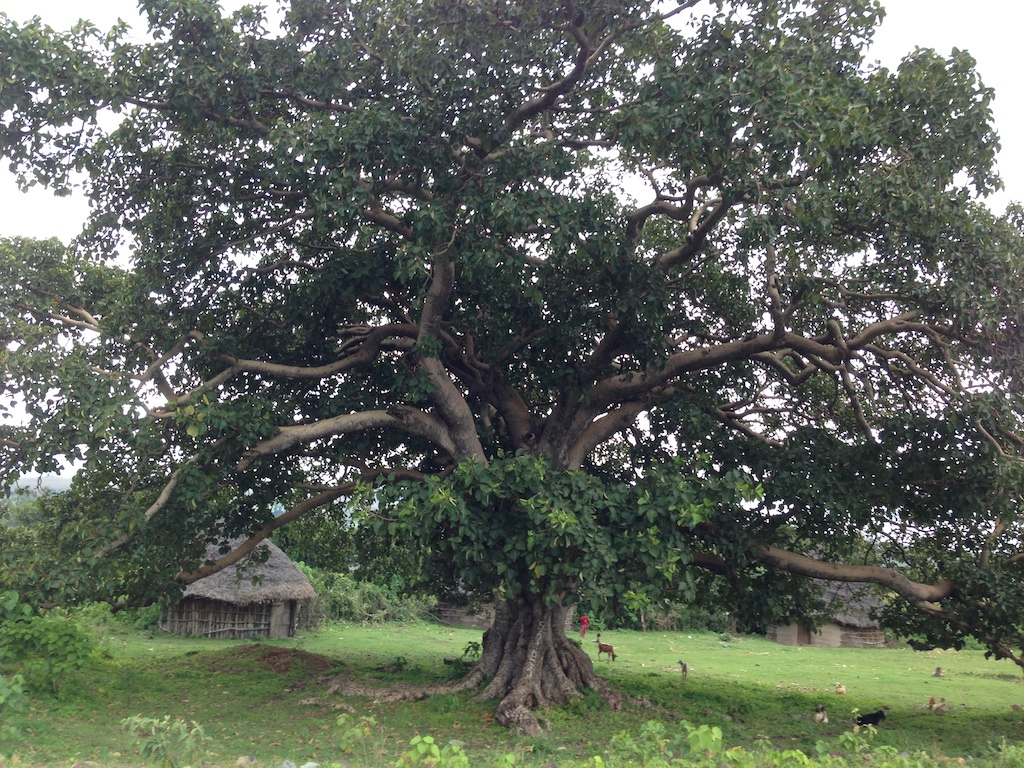
large tree

The second hospital was a large tent, usually used for celebrating weddings or funerals, set up next to our main hospital. The main hospital still had plenty of work. There were about 40 beds in the tent. A young 17 yo visiting Australian, while not medically trained, supervised the night watch. The local workers tended to find a place to sleep if there was a hiatus in work. The young man kept an eye on the IV drips and status and woke the workers if/as necessary.

We setup a vaccination program using senior primary school students to perform the intracutaneous injections. (A number of our primary school students were late teenagers or young adults who had previously had no education. They were seeking a basic 3R education.) This intracutaneous route was chosen because the volume of vaccine used was much smaller, and we had a limited supply. These older students were used to responsibility; and learned fast. This program was supervised by an American physiotherapist and they carried out over a hundred thousand injections in a number of sites around the area over 3 weeks. The tribal population was about a million.
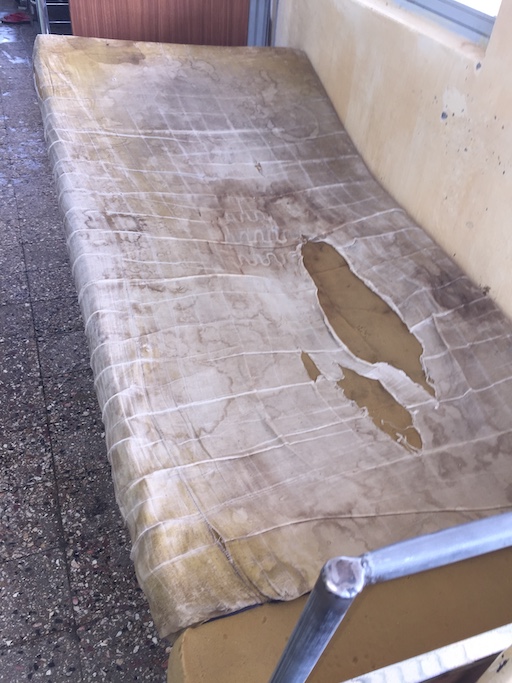
hosp bed 2

The bed above was typical of those being used in our University hospital in 2017. They are much better than what we had in our cholera tent!

Fortunately we were 2 doctors there at the time. The advantage was tempered a bit, however, as one of our sons was born during this time, a bit premature and fairly heavily jaundiced. My wife took him to the capital for advice and as an escape from the environment.

The government and WHO were very generous providing adequate antibiotics and a plane load of IV fluids. The plane landed in a field near the hospital.

We treated over 900 as inpatients within a month, without a death among those who arrived at the hospital alive. In addition those with milder symptoms were treated as outpatients within the hospital grounds.

Treatment was urgent and intense but in the appropriately treated the cure was rapid. The antibiotic we had was long acting sulphur. Patients needed sometimes up to 30 litres of IV fluid in the first 24 hours (keeping up with the diarrhoea) but after that it lessened quickly and we made them drink water from which the dirtiness had been settled out with alum and sterilised with chlorine. We had difficulty getting them to drink our ‘clean’ water. They said it had no taste. We bought 3 different cake colourings (red, blue and yellow) and coloured the water, lying I guess, and insisting that it was powerful medicine. In reality that was true for the dehydrated.

An interesting experience. I was went through a smallpox endemic at another time. 

Dominic Cartier.


Continue reading “A brush with cholera”

Follow up on Mesfin of the ‘3 Teenagers’

boy's home
The home in which Mesfin grew up.

Mesfin, Tadessa and Solomon all have fascinating stories beyond what was written in A house full of teenagers. Mesfin was the first to come to us.

In countryside areas of Ethiopia birth certificates were not issued at that time when children were born. You could buy them and supply the details which you chose to have put on them. So it is a guess as to how old Mesfin was when he came to live with us. He didn’t know his birth date either, it not being the custom to celebrate birthdays; so we appointed my father’s birthday as his and guessed that he was maybe 16 or 17. I am writing this on his ’41st’ birthday! He was in grade 9 in the local high school. Schooling was for half a day – one group of students had classes in the morning and a second group had class in the afternoon. They alternated from morning to afternoon weekly. There were so many kids to be educated, and this arrangement allowed each school to double its intake! Mesfin was bright. He had a cocky, cheeky nature but was delightful and wanted to learn. His English became very good with an Australian accent. Continue reading “Follow up on Mesfin of the ‘3 Teenagers’”

A small taste of what will be a bigger post one day…

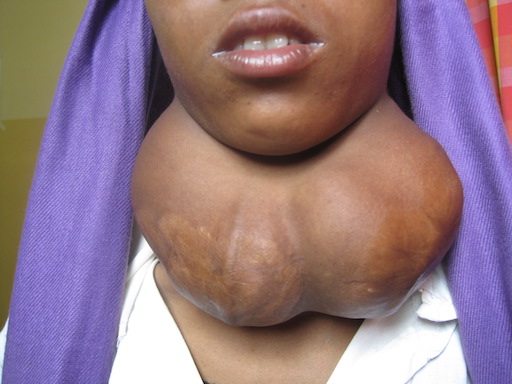
standard thyroid 512As I understand, the world record for the weight of a thyroid is 13Kg. This example maybe slightly more than a Kg which still weighs much more than the normal about 20Gm.
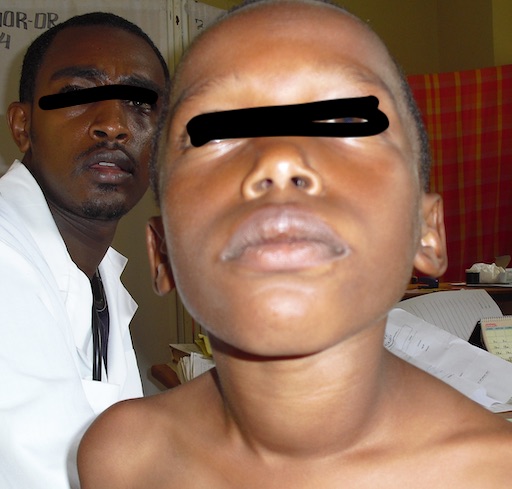
I previously wrote about an interesting case in A sad but interesting case. Being very mountainous there was a high incidence of goitre which unlike the reported PNG experience did not respond to simpler medical regimes and often required surgery. We used to list the common indications to consider surgery as

  1.  difficulty in breathing or swallowing
  2. enlargement into the chest
  3. Proven or Suspected malignancy
  4. controlled hyperthyroidism (over action)
  5. cosmetic.

The marks on the neck are from the application of national herbal medicine. It didn’t seem to help.

After 300 such procedures I wrote a paper. There was a 15% incidence of small malignancies in the very large glands. But we’ll leave more for another day!

malig thyroidThis small thyroid in a young teenage boy proved to be malignant. The post grad student in the picture has become a famous surgeon.
Dominic Cartier.

A house full of teenagers.

shopping

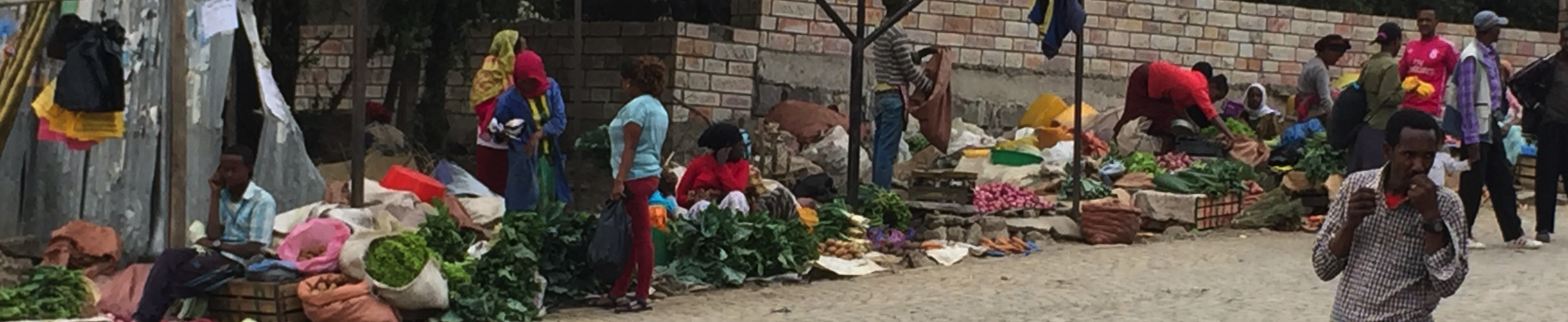
During a later overseas stint, although we had children of our own, they were by then all adults, and none of them were living with us. Fairly soon we took in 3 teenagers, let’s call them Mesfin,Tadessa and Solomon.

Mesfin and Tadessa  were cousins. They had families who lived about 400 meters apart and a kilometre or two from us. Once when we asked how close they had been growing up, they said ‘we used to dig one hole and go back to back’. They were good friends. Solomon was a double orphan.

How did we get them?

Mesfin had a much older half brother, who had left home, and a tribe of sisters. He had a gentle mother and a fiery father. He himself could get pretty hot headed. We already knew him because he gardened part time after school at a friend’s place. He used, from time to time, drop in for a chat. I think to get a drink and improve his English. One day he and his father had a real blow-up. Not fisty cuff wise but so intense that he walked out of the home. Later that day he stormed into our place, still seethingly angry, saying that he was going to live on the street.  Nobody should be street kids with all that implies. After some pretty stiff negotiating he became our first teenager. Later on we got to know his family and peace was made, but he stayed with us and one of the sisters became our cook. Mesfin is now the president of the bus drivers’ association of Addis Ababa, a city of about 8 million people; he is married with a small family. Continue reading “A house full of teenagers.”

An introduction to Life in Africa

African sunsetAfter obtained my higher surgical degree I spent six months in India before going to Africa. Like a good boy I was up to date with vaccinations and all those necessary things before I left for India. I was ready for my life in Africa!
We flew along the Arabian coast line at the same speed as the day was starting – travelling East to West. All the way the sun shining on the cliffs was magnificent. Flying into Addis Ababa was green and so much like Australia with all the gum trees. Our two young boys were able to stretch out and sleep all the way from Karachi, which was bliss for us.

The landing was smooth; the passage through Immigration was not. Well, it was for my wife and the two boys. They were allowed through, were met by the mission heavies and taken to where we were to stay, whereas I was arrested. I was put into quarantine because my cholera injection was one day over the six months expiry time. All my arguments fell on deaf ears. My wife and the boys had had no problems in entering as they had joined me in India several months into my stay there and had their shots just before they left.In the quarantine station  I met a Greek (I think) doctor who agreed with my very logical argument that the injection is not 100% effective and the six months is not exact to the day. He gave me a booster injection and sent me to where my wife and children were.
While not being usually very tearful, having been told that I would be sequestered for six weeks, she was crying buckets full. Tears rapidly turned to joy.
We had a few days to acclimatise before we were due to head south to the place I was to work. We had needed to buy five years clothes, kitchen stuff, linen etc.  The two growing boys would need a lot of extra clothes. Things were very different in Africa 55 years ago and few things were available in the shops. Hospital expected requirements had to be ordered 6 months ahead of their needed date. We had planned to stay for 5 years. So, although we flew, 16 boxes had been sent ahead by ship.
We had to go to many offices over a couple of days to get it through customs but we were not charged duty. Foreign workers were very welcome at that time. There were 300 doctors for 30 million people and few of the 300 were trained surgeons.
Ten days after arriving in the country we were taken down to the hospital in which I was to work. There was a leprosarium with 700 inpatients plus an outpatient service. Many lepers had moved into the surrounding area as we were the only leprosarium in the southern region. There was also a 30 bed general hospital with an outpatient service with an average attendance of about 100/day. There was one doctor, 5 trained nurses and many national workers, including a number of trained dressers. Some other time I might say how we managed it all. I was to replace the one doctor who was leaving in 2 weeks on a years break.
We arrived at 3 in the afternoon. The doctor’s wife gave us afternoon tea. The doctor had some emergencies which he wanted me to see – as they needed surgery immediately!
We got home for supper at midnight having seen a number of patients and performed 3 operations. Two of which I recall – an urgent Caesarean Section and a bowel resection on a 16yo girl with a large mass obstructing the right side of her colon.
That was the start of a marathon run lasting several years.

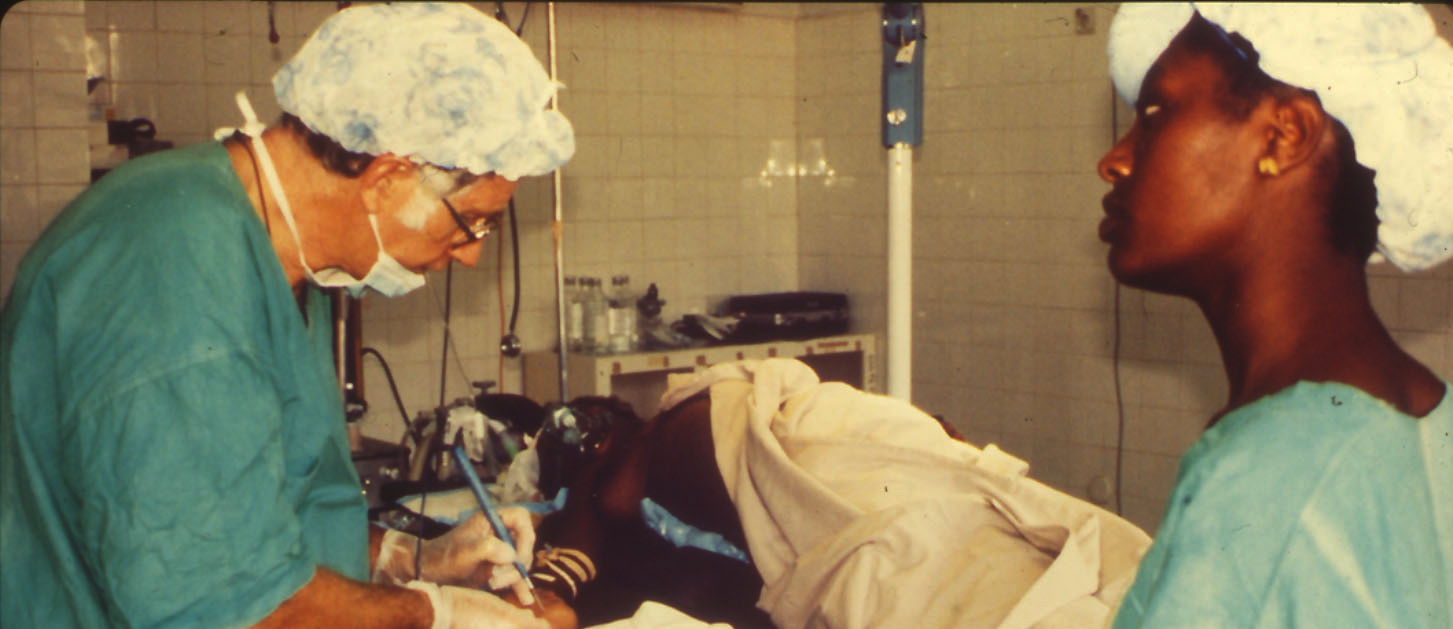
double use of OR 2

Please don’t comment on the masks. I had operated on the patient seen in the background and was just preparing something on the second patient – a child – he too was asleep. Due to lack of staff to watch people adequately we sometimes ad even 3 patients in the OR. One being operated on and the others(s) being observed. From the greyness of the sideburns I can tell this was in my second trip. On the first trip – no grey, then white sideburns, then eventually all white! (I cut the kid out of the picture as he was not appropriately dressed).

Continue reading “An introduction to Life in Africa”