Arriving at Shashemane.

Looking East travelling from Addis to South

We travelled for the first time to Shashemane in April 1968. We had arrived in Ethiopia 16 days earlier and we were taken down the 250 Km ride by a couple of missionaries who were travelling further south to their station (another hospital 120Km on the road leading to Kenya). It was good to hear of their experiences in Ethiopia where they had been for many years. Our mission station was big and very busy. There follows an ‘Excerpt From: Barry L Hicks. “Have Scalpel – Will Travel.” Apple Books.’ 

We arrived in Shashemane at about three o’clock in the afternoon and were taken straight to the home of Dr Lindsay and Mrs. Marion McClenny, some of the loveliest people one could ever wish to meet. They were due to go on furlough in a few weeks and we just had that time to be inducted into the work. As we arrived and were introduced Lin, usually called ‘Mac’, told me that he had a patient he wanted me to see urgently – but we had time for a cup of tea first. (Tea provided by Americans! And hot tea at that.) By 3.30 we were in the hospital and we eventually got home for the evening meal at about 11.30.

In the mean time we had seen the patient he wanted me to see – a teenager with a right sided large bowel obstruction due to a huge caecal tumour – and two obstetrical emergencies both of whom needed surgical intervention; we had also seen a couple of other lesser emergencies. Mac dealt with the obstetrical cases – a high forceps and a Caesarean – and I did the right hemi- colectomy for the teenager.

I knew that I was going to have to deal with the obstetrical and gynae procedures as soon as he left and so was keen to learn all I could before he departed on furlough. The specimen of bowel removed from the girl, containing the large mass in the caecum, was sent to the only pathology laboratory available in Ethiopia at that time at the Black Lion Hospital in Addis Ababa. The report arrived exactly one year to the day after the operation. It was fortunate that the patient was not kept in the hospital until the report came back. Typical of patients in countryside Ethiopia, she never returned for any follow up anyhow, so I don’t know what happened to her in the long run.

Very early in my stay there I was asked to review the seven hundred inpatient lepers. I think that I was the first one with any specific leprosy surgical training who had ever been there and if not the first then certainly the first for a long while. In India I had learned a lot of reconstructive procedures and doing this review I had the twofold objective of finding those who could be helped by surgery and to discharge those who did not require inpatient therapy. Thinking about long term hospitalisation had changed rapidly in the few years prior to this period of time.

On the first count I found few who wanted surgery, basically because as farmers they valued strength in their hands above the restoration of the finer movements such as those used in writing – the majority couldn’t write in any case. Sadly also they were valued in their families because of the loss of sensation which allowed them to lift hot things, such as cooking pots, off the fire without pain. Many of them, although the infectious element of their disease had been cured, were left with marked deformity and shortening of their fingers.

The leprosy hospital was built largely by money given by the Leprosy Mission on land given by Princess Tenagnework. It was a 50 bed hospital with an operating suite.

Dominic Cartier


A snippet from my book…

Taken from the front veranda of our home – living in retirement!

I am, I guess, getting a bit lazy with the hot, muggy weather and the aging process. So what I am doing today, and may continue to do for a while, is posting a segment of Chapter 20 from my book ‘Have Scalpel Will Travel.

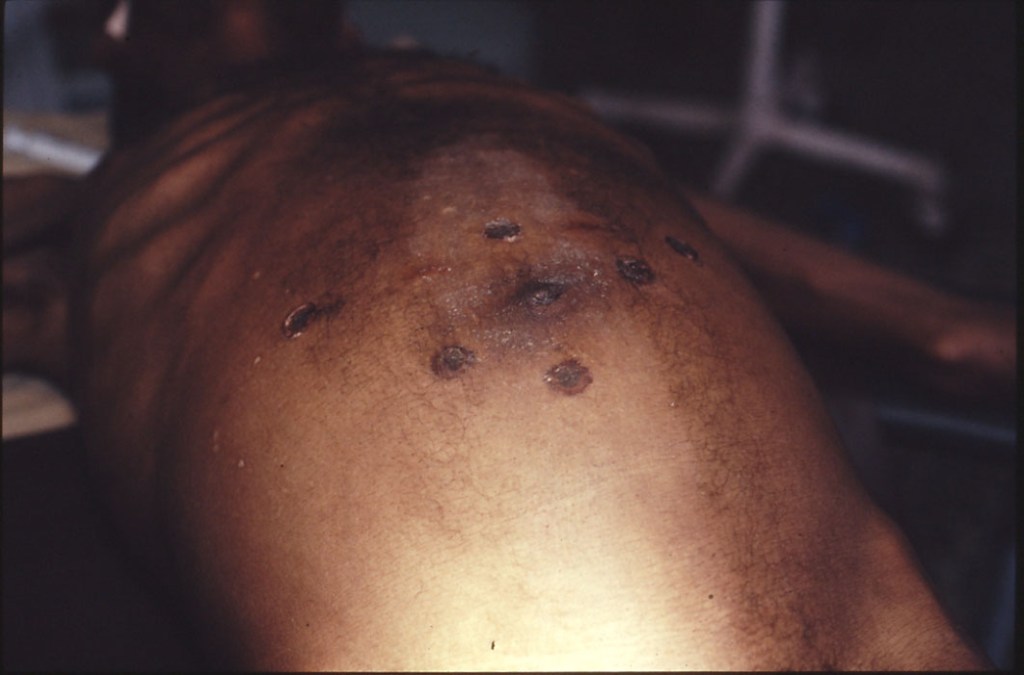
The chapter is entitled ‘A Different Culture’. I was working on a Mission Station as a Surgeon, which was a full time job. But soon I discovered that people had to be assessed and treated taking into account different things. One of these was their religion. For instance i) the dietary requirements can cause real problems treating a post operative case during Ramadan or ii) the strong religious commitment of some created unwillingness to be seen for examination particularly by a foreign infidel iii) There was a very high incidence of low large bowel obstruction due to volvulus and in treating this certain procedures, of necessity, needed the creation of a colostomy. This stopped them going into the mosque to pray. Sometimes they chose to die, although with experience we were able to reduce the incidence of needing a colostomy. This led to one of my areas of disagreement with the Surgical Department in Addis. I am delighted that my way has won the day all over Ethiopia by this time. As seen in the picture below patients, they often presented with infected burns on their abdomens – burnt to try and drive out the evil spirits causing the problem. Or often the patient had drunk the blood of an animal sacrificed to appease the spirits causing the problem. These last two situations were seen because of the animist background of the community.

My book is an ebook, presented through Smashwords. The author is Barry Hicks and you’ll have to decide if this article or the ebook is written under a pseudonym. It is easily found on internet by typing in Smashwords.com Have Scalpel Will Travel. Memoirs of an Older Surgeon. It’s cheap and I think an interesting read; you may or may not agree on that! There are no gruesome pictures, although I have many!

Continue reading “A snippet from my book…”

More Ethiopian Proverbs

Following on from yesterday’s post, here are several more Ethiopian proverbs from the list my wife laid on my desk…

  • A mouse that wants to die goes to sniff the cat’s nose.
  • When spiders’ webs unite they can tie up a lion.
  • A house can’t be built for a rainy season that is past.
  • The person who grew up without correction shall find his mouth slipping instead of his foot.

No explanation comes with them but I think the meanings are pretty universally understood. I just imagined, after maybe a family evening dinner or sitting around a BBQ on the weekend, putting them up for a family discussion. Sadly our kids are all grown up and flown the coop, but with them as late pre-teens or teenagers I think we could have had some interesting discussions.

If you try it let me know how it goes.

Dominic Cartier

If only….

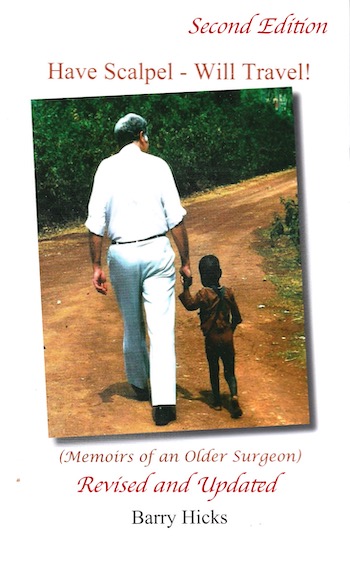
The picture below is the one on the front of my autobiography. It was taken in the mid 90’s in Soddo, Ethiopia. I developed a fairly close relationship with the boy who is walking with me. He was deaf and dumb. There was a blind school nearby but he wasn’t blind. There wasn’t anywhere near to help him. In my early days there before we got a vehicle, I often walked past his home going between our home and the hospital. If only I hadn’t had an already heavy schedule…. but had the chance to meet the family and know more about him. I got to hear his story from the workers and did my best to be a friend to this little guy isolated in an overpopulated area inside his silent world. So we’d walk together sharing a chocolate bar, pointing out things that interested us, but sadly absolute silence. If only we’d known ‘signing’ …. Our home was about a kilometre beyond his and when I was walking home he’d walk with me but then after a while suddenly break off and run home to his area of safety. 

Then we bought an old 4WD and as I drove past he would climb up on my knee and steer for maybe half a kilometre before tapping my arm to stop, hop out and run home. I think that either his playmates indicated that I was coming or he, being deaf and dumb, appreciated the vibrations from the car transmitted through his feet. At any rate it was rare for me not to see him coming to the side of the road, waiting for me as I drove past. When we left Soddo one of the saddest things was leaving him. He did not have an intelligence problem, and hopefully as things progress medically in the land, he will get help. If only I’d been able to find an appropriate school…

This image has an empty alt attribute; its file name is hswt-cover-350x560-1.jpeg

I did meet him again several years later when I visited the Soddo area again. He ran up to me with a very broad smile but scratching himself all over. He was covered with scabies. The diagnosis was easy and the treatment relatively cheap, but not all that easy, as it involved bathing and washing clothes. Having worked there just a few years earlier I quickly worked out how much to get him seen, and medicine ordered, then added a little for inflation and gave it to one of the hospital staff to sort out. I was told that after I had left the pharmacy had been privatised and costs adjusted (in)appropriately. Thus the money which I was offering was now insufficient to even get him a card to be seen. I added more, but had to leave and am not sure who prospered from my money, the boy or the one sent on an errand. If only I’d been able to stay and look after him myself….

Life has so many ‘if only‘ situations. You’d go mad if you held onto them too tightly.

A late night..

Just after the communists were driven out of Ethiopia, the organisation we were connected to preferred us not to travel at night. We were seconded to a government hospital in Soddo. There was still a fair bit of shifta (bandit) activity. We had planned to leave earlier than we did, but I was held up at work. Our planned trip was about 400 km. It was almost getting dark when we filled up the main tank with diesel in a town about 150 km from our departure spot. We were using the reserve tank and didn’t switch back onto the freshly filled main tank until we arrived at the next main town a further 100 km along the way.

Within about ten kilometres, having spluttered for a while, the engine stopped altogether, My wife and I, with the 3 Ethiopian teenagers who were living with us, were stranded just outside a prison farm in the dark. A place which we had heard was not well secured.

What should we do? There was a mission station back in the town we had just passed with people we had met. We could not contact them as in those days no such things as mobile phones existed. So my wife and the oldest teenager stayed with the car and the younger two and I set out to walk back for help. I guess we were a bit scared, it was dark and I had seen at the hospital what bandits could do. I can’t remember what we talked about until the youngest explosively let off a prolonged emission from his nether end. He was embarrassed but so what! It got us talking about what sounds were common to all mankind. We could in the languages we knew between us, apart from belches and fluffs,  only think of  ‘amen’ and ‘hallelujah’. 

By the time this enlightening conversation was over we arrived back at the last town, and were able to get help. Our acquaintance at the mission got some tools and 20 litres of diesel and a tow rope. I went to the local motel and found out how much it would cost to stay overnight.

With the mission guy’s help, having been towed back to the mission station, we discovered that the diesel we had bought previously was about 80% water. This was drained out, his diesel put into the tank, we were profuse in our thanks then went to the local fuel place and filled up. By now it was getting late, so I went back to the ‘motel’. But the manager had heard about us and, realising that my wife and I were white, doubled the price for all of us even though 3 were Ethiopians.

I decided we’d take our chances of bandits on the road rather than be robbed by this guy. So off we went for the last 150 km. No more robbers, and we arrived at about midnight. We hadn’t been able to contact them but the place we were to stay (friends) having been worried about us were glad to see us arrive.

Bominic Csrtier