The leprosarium extended – part 1

African sunset

I have previously posted about my time working in a leprosarium. Working in a leprosarium 1968-74  I mentioned there the other side of the work carried out on the same station. As leprosy only rarely has acute problems I spent most of my time in the non-leprosy part of the program. I only regularly spent 2 half days/week with the leprosy program, besides seeing the occasional emergency in the leprosy department.

Other work for the general community – this post will only discuss the second non- leprosy medical work. There were several other aspects for another day!

There was an (officially) 30 bed hospital with an added 12 bed TB ward and an attached outpatient clinic.

It was the only hospital covering a large area and several million people. Through the country there were scattered clinics run by dressers (they were not to nurse standard but with some training, and had permission to prescribe a few simple medications) and a few mission clinics but the nearest hospital south was about 80 km away; north 200 km; west 150 km; east several hundred km, and this in a heavily populated, very fertile, part of Ethiopia. We were at the cross roads which led in all 4 directions. At that time cars were few and far between and public transport was limited. As loaded trucks often carried many people on top of their loads we often had mass emergencies if there were major accidents. And there often were!

It really wasn’t beds for just 30 patients. We used to put smaller children one at the head and one at the foot of the bed. In times of great overload we used to sometimes put patients on mattresses under or between the beds. There were verandas on the east and west sides of the main building and we would spread mattresses on them. Sometimes in the rainy season there would  be a rush to change the ‘veranda’ patients to the other side away from the rain slanting in from one direction or the other. Most people chose to go to the clinics or to natural healers before a percentage came to us. We could never have survived if all those who should have, had come!

This general hospital had a small ‘operating room’ which was mainly used for obstetrical deliveries which needed forceps deliveries. More major cases, obstetric or other general cases, were taken to the OR in the leprosy hospital. We had few normal deliveries apart from the wealthier women from the nearby moderately large town. For a normal delivery they were charged about ten times as much as a poor person with a complicated pregnancy – something about robbing Peter to pay Paul. Unless there were problems after delivery these ladies were allowed to stay about half an hour.

The room was also used to reduce simple fractures and for suturing. The leaded room with the X-Ray machine was attached to the hospital. The machine was an old WW2 field one. A local young man was trained to take the simpler X-rays. See an example of one of the chest X-rays below.

In addition to the 30 beds there was a 12 bed TB complex. TB was very common. Only the very weak or those with complications, like lung collapse or paralysis from TB of the spine, were admitted. Another national worker was trained to aspirate chests and put in chest drains.

The  outpatient department was in a separate building. It included our small pathology department. We treated about 100+ cases a day. Apart from acute emergencies, who were sent directly to the emergency room in the hospital, all were seen initially by a dresser. If they couldn’t make a diagnosis, or if the patient returned with the same problem, they were referred to the nurse. If the problem still remained the nurse arranged for them to see the doctor sometime. I, or if there were 2 one of us, tried to visit outpatients just before I/we went to lunch.

Emergencies were common. I remember one day when 3 ladies with ruptured uterus came within 5 minutes of each other! As well as daytime surgeries, planned or emergency ones, many emergencies arrived out of normal hours, so we operated most nights as well on emergencies.

The 4 nurses had the following duties: One was in charge of the general hospital; one of the leprosy hospital including the OR; one in the leprosy outpatients; one in general outpatients. If we had 5, the fifth was on night duty for all the work – if there were only 4 they rotated around taking responsibility for both parts of the work at night. They were very competent and really acted as junior surgical registrars.

Below the more line is a picture of a chest X-ray of a TB patient. Continue reading “The leprosarium extended – part 1”
Working in a leprosarium 1968-74

African sunset

I have posted before about our first day in the hospital on our first spell overseas. An introduction to Life in Africa The establishment had a large complex of programs run by a Christian mission. It was on land given by the Emperor’s daughter and it’s distinctive feature was that it was to have a large leprosarium. This was in a period where the concept for many including the government was to keep people suffering from leprosy (Hansen’s disease), certainly those with the infectious variety, apart from the general populous.

The government gave a grant to the mission to help treat 700 patients residing on the land already granted to them. Nearby there was another parcel of land given for the mission to produce food to feed the leprosy patients living on the leprosarium.

The mission took this work very seriously and expanded way beyond just keeping lepers off the streets and treating them in the relatively limited ways available at that time. The work of Drs Cochrane, Brand and Fritschi, basically in India, with their teams had made much progress but treatment was not as available nor efficient as it is today. India was much more developed. I had some time in India with Drs Cochrane and Fritschi on my way to Africa.

The local tribal language was what is now called Oromepha. The greeting was ‘Nega, fiya, urga’ roughly translated ‘hello, how are you? It’s nice to smell you.’ The last bit sounds nasty. But the verb really had broader meaning, including to sense, and I think the intent was something like ‘it’s good to sense your presence’. But because of the use of rancid butter smeared on clothing to make it waterproof, added to smokey fires in houses without chimneys, there was often a fairly powerful smell. When I had been working in the operating room where, in addition to the above, we used a lot of ether for anaesthetics, I personally collected some of the odour. Many times when I got home to greet my wife, with a loving kiss, I got told ‘You stink, go and have a shower.’

Early in our stay, I remember introducing my young son to a lovely bright young man who had come to visit me. The man knew good English. The boy greeted him politely then turned to me and said ‘Dad, do all Ethiopians smell like this?’ The guy was very gracious saying something about kids being like that everywhere!.

The compound had 2 parts. That devoted to leprosy treatment and that for general service to the surrounding community. Today I’ll write about the leprosy part of the work. The general service to the community aspects were almost as extensive! Continue reading “Working in a leprosarium 1968-74”

Easter this year.

burnt churchThere was a stage when the local church head office had to deal with 4,000 displaced people. Displaced because nearly 100 churches and many homes had been burnt down by a group of fanatics. The University abuted the church property and our home was one that had previously been built for foreigners working with them. We weren’t directly involved until a friend in Australia sent a sizeable gift which he wanted us to equitably hand out to the needy; with stipulations we did it through the church heavies.
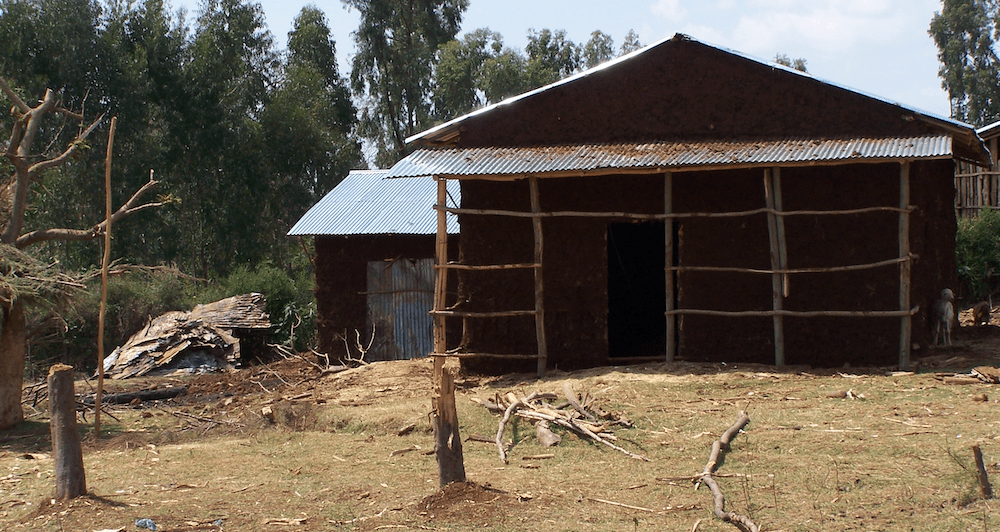
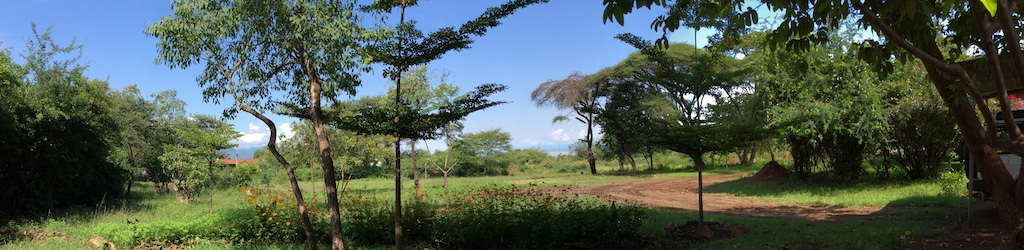
Ministers of every Christian denomination must feel that Easter in their calendars has been dealt a similar blow this year. The people got together and rebuilt their churches and I was asked to be present at the re-opening of several of them. They were rejoicing – because having suffered for their faith they were now in better shape than before. In one instance they even built a school for the children of their persecutors!

rebuilt church

Easter means something to everyone! Travel, holidays, sport, religion.

There are always school and maybe university breaks. There are major sporting events; many go camping; it is a major holiday period.

The breaks have extended this year into areas where no one wanted them to go; people stood down from their jobs; many businesses, leisure spots, sporting events being closed! No travel permitted! And it’s no holiday at all, with the 2 person and 1.5 metre rules in place. There are resultant extreme financial problems for many.

This is all very sad, and affects us all, some very severely. It is not to be belittled, but it’s not the fault of Easter. It’s THAT virus!

Let’s remember, however, that Easter was not originally meant to be primarily a ‘holiday’ but a ‘holy day’. A time free from work, an opportunity to worship. The heart of ‘Easter’ is a religious thing. I think many will miss the services of the Holy (Passion) week – Maundy Thursday, Good Friday, Easter Sunday. We’re told that many go to church just at Easter and Christmas. Well this year they’ll miss out on Easter.

When I was young I wondered why they said that Jesus rose on the third day. He died Friday and Sunday is only 2 days later. It all made sense after I went to Africa. If I made the mistake on, for example, a Tuesday of telling a patient to come back in 14 days (there was no word for a fortnight), they always came back on the Monday. If I said come back for a check in 4 days they always (to my counting) came back in 3. You had to get used to it! Today was counted as day 1. Thus Friday, He died day 1, Saturday, in the grave day 2, Sunday – He rose on the third day.

The government can, and probably correctly, has cancelled public gatherings. They cannot cancel history, so our house will meditate and rejoice!

And I remember those in other lands who all year, every year, face Governmental restrictions and persecution, and I am glad that I can at least celebrate without fear in my own home.

Damien Cartier

A house full of teenagers.

shopping

During a later overseas stint, although we had children of our own, they were by then all adults, and none of them were living with us. Fairly soon we took in 3 teenagers, let’s call them Mesfin,Tadessa and Solomon.

Mesfin and Tadessa  were cousins. They had families who lived about 400 meters apart and a kilometre or two from us. Once when we asked how close they had been growing up, they said ‘we used to dig one hole and go back to back’. They were good friends. Solomon was a double orphan.

How did we get them?

Mesfin had a much older half brother, who had left home, and a tribe of sisters. He had a gentle mother and a fiery father. He himself could get pretty hot headed. We already knew him because he gardened part time after school at a friend’s place. He used, from time to time, drop in for a chat. I think to get a drink and improve his English. One day he and his father had a real blow-up. Not fisty cuff wise but so intense that he walked out of the home. Later that day he stormed into our place, still seethingly angry, saying that he was going to live on the street.  Nobody should be street kids with all that implies. After some pretty stiff negotiating he became our first teenager. Later on we got to know his family and peace was made, but he stayed with us and one of the sisters became our cook. Mesfin is now the president of the bus drivers’ association of Addis Ababa, a city of about 8 million people; he is married with a small family. Continue reading “A house full of teenagers.”

Some thoughts on tolerance…

IMG_0018

The majority of our society is constantly calling for tolerance. Personally I’m not sure  that unbridled tolerance is wise or to be sought after.

If I am called to be tolerant to all groups, then must/should I show tolerance to those who get their kick out of lighting bushfires to watch the blaze? Why not be tolerant of the jealous person who, deeply emotionally disturbed and jealous, murders his/her partner’s lover? Why not be tolerant, and understanding of, the alcohol/drug affected driver who runs his/her car into a group of young people? What about the drag queen who tries to influence the children of straight parents, who desire to bring their family up in a Judeo-Christian way? Why are we not tolerant of people who circumcise their female children? Are we not judging them, and being intolerant, by calling it ‘genital mutilation’?

Maybe there is a standard which is acceptable and above human law or personal opinion. Maybe not everyone should be free to decide on their own standards.

Our governments in the West and in the majority of nations have shown themselves incompetent to lead their people in right ways. In the call for tolerance and maybe largely at the insistence of fringe groups, they are legislating against historically established standards of morality and social structure and custom.

Are there males and females? Yes, and they are as determined by XX or XY chromosomes and by external appearances. If their chromosomes are XY and the genitals are out they are males; if they have chromosomal XX and the genitals are inwards, they are females. There are a very small percentage of genital and physical abnormalities which are a trial to the individuals and to those with whom they are close and involved. They must be respected, treated with love and tolerance, but they are not the normal pattern of life. 

Sex and gender have historically had the same basic meaning. There have been characteristics described as male or female and I doubt if there has ever been anyone with either only male or only female characteristics. The balance of these make us what we are. Maybe with time, learning, experience and even choice we can modify our character. This does not modify either our sex or our gender.

What are the stages of human life? It is pretty well settled in most people’s thinking; conception, embryo, foetus, newborn, toddler, child, pre, pubertal & post pubertal, adulthood, old age, after life. Why are we asked to tolerate murder at the extremes and deny the last stage, which if real (and there is evidence to say it is) is the largest part?

What has been known for years as wrong is now lifted up as the ‘to-be-accepted and tolerated’ norm. I am neither convinced nor personally prepared to accept such what I call un-informed, immoral rubbish!

Dominic Cartier