Everyone has a story – Habtamu

lakeChomo copy

During our last term in Ethiopia we only had our youngest adopted son living with us. But that meant we had a house full of boys. Three ate with us three or four times a week and there were others from time to time. The memories of those three are precious to us and I might get to write about the other two sometime. I’ll call this one Habtamu, a name which means ‘the rich one’, although he was and is truly poor. As time passed we got to know the history of all of them.

Habtamu was scholastically the brightest of them all. In grade 8 where the pass mark was 37% in the government exam he got 80 something. He was the only one of the three who had a vision of a tertiary education. He was orphaned at age 5. His parents had bought a place in Arba Mintch, and having sold their village place were killed on the way to their new home in a bus crash. Their three children survived. The home which they had bought had 3 rooms. Their eldest child was a girl who was given the responsibility of bringing up her two younger brothers – Habtamu being the youngest. The sister is now married and has a child. Habtamu lives in a little room on the side of the house. He often asked our son to help him in the evenings or weekends when they, like the Israelites in Egypt years before, trod mud and grass together to patch the walls. We paid for all four boys to go to a private school (a cheap one – but they got a full days teaching, whereas in the public schools you only got half day teaching). When we left our son came back to Australia with us. Two of the boys started work but Habtamu wanted  to continue his education. Without being lavish we have continued to support him, with the help of a couple of generous people.

He still lives in that same small room on the side of his married sister’s home. But he may well be seen as richer than most because we have bought him a computer and a few other things. Have these things been a blessing? It needs  a yes-no answer.

Yes, it has allowed him to continue with his now tertiary education. His score was enough to get him a place in a University but not at the one in his area. He would have to have gone hundreds of kilometres away to do a course which he hadn’t chosen. He still tries to help care for his older brother who studies at a Government University far away. So he elected to go to night school for some extra points and is taking an accountancy course at a private institution. These are courses which have to be paid for.

The answer is ‘no’ because there have been many attempts to break into his room. (The home is not in a good place). A few months ago he was beaten up and ended in the local hospital. His injury was in the upper third of his face and particularly around his right eye with a lot of swelling and some lacerations.  Continue reading “Everyone has a story – Habtamu”
A few pictures from the past.

I’m sick of cataloging this afternoon. So here are a few pictures from the past, none medical.

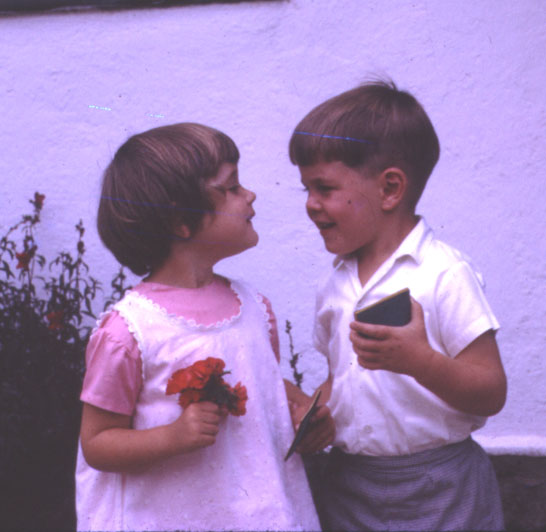
David & Nancy
50 + yrs ago. He’s now a grandfather


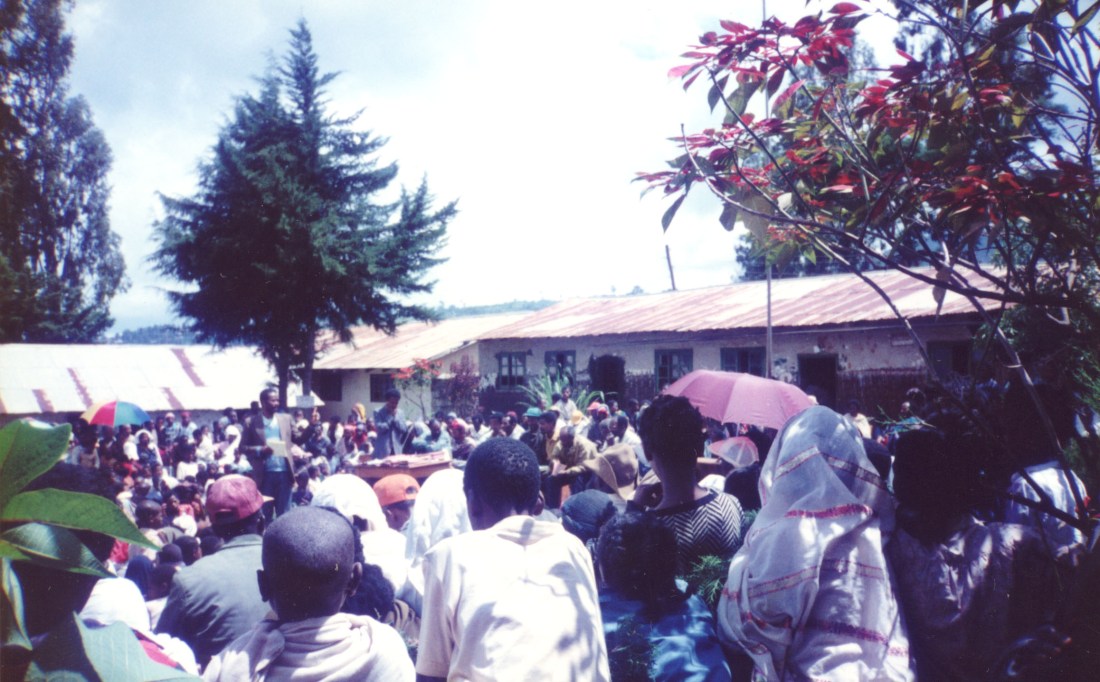
school yard-S
25 years ago. The school where one of our adopted children attended Solomon – the third teenager
bridge building
Built to safety standards. We eventually got to drive over this bridge! 10 years ago
Government housing
The house provided for us at one place. My wife went home while I lived around the workers whom I paid to have it fixed. 25 years ago.
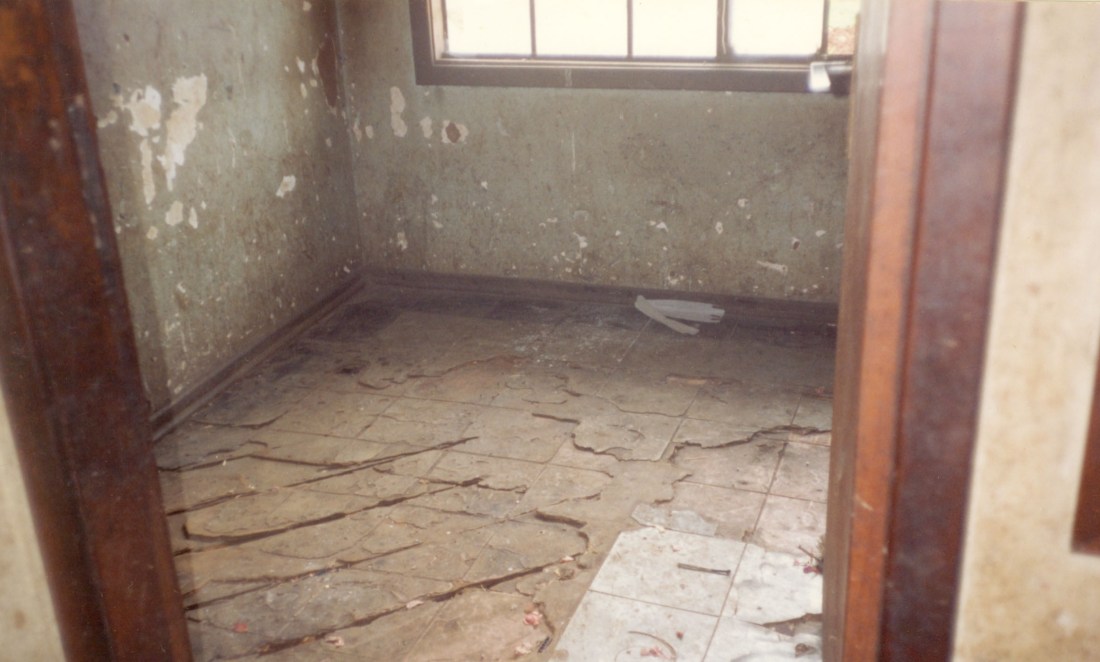
govt housing 1
One of the bed rooms.

And so it goes on. But enough for one day.

Dominic Cartier

A baby is born

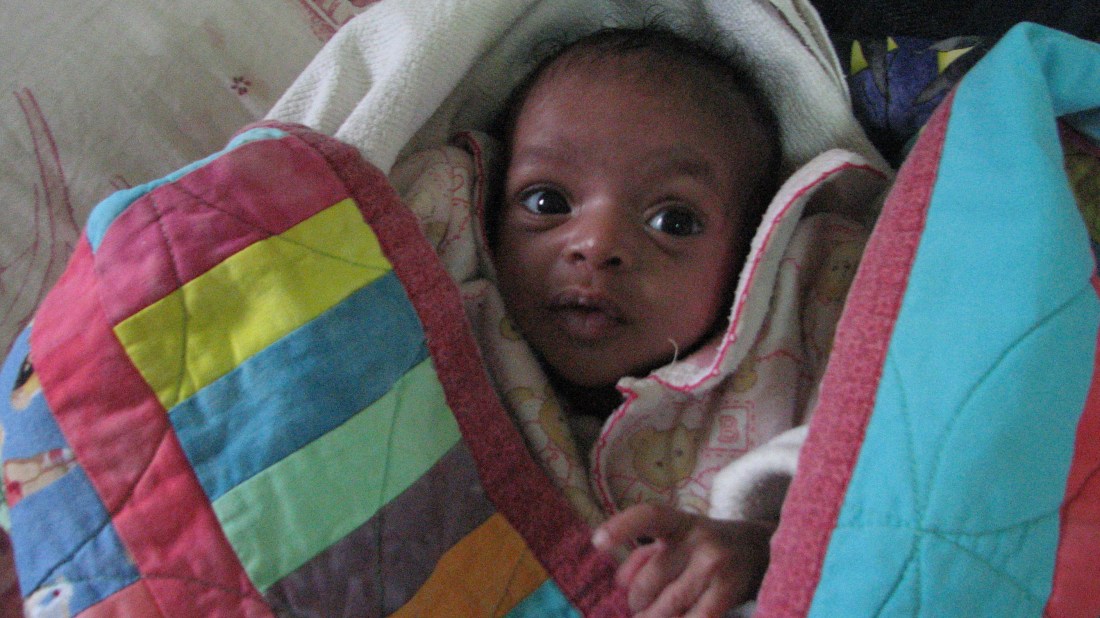
IMG_2937 copy 2

A baby girl is born. So what’s so amazing about that? We’ll call the girl Rahel which isn’t her real name. Her birth mother had just been left by her husband, and none of her family wanted her. She was an epileptic, and fell into a fire and was very seriously burned. She lost her left breast and had serious full thickness burns on her left side and down her left arm. She was pregnant and at term. She delivered Rahel the day after she was admitted to the hospital. The mother would have nothing to do with her, I think understandably in the circumstances. The mother was dreadfully ill and sadly weeks later died, after lots of treatment. There were no relatives around.

But the story is about Rahel. She was taken to the special care baby unit, where after a few days they rebelled and said she wasn’t a sick baby so she couldn’t stay there. So she was brought into her mother’s ward, my wife bought infant formula for her, but they rebelled for the same reasons. So we brought her to our house while we tried to work out a solution. We were in the middle of adopting our second Ethiopian son who was about 10 at the time. We all loved her but didn’t feel as if we could or would be allowed to adopt her. Our next door neighbours were Europeans, supervising the care of  street kids whom they placed in willing local homes and financially supported the families to cover the cost of an extra child. Our neighbours knew English but their prime languages were different. Thus their household spoke four languages – their two home country languages (very different), English and Amharic, the common language of the local populous. They already had three boys of their own but after some consideration decided they would like to adopt her.

My wife, although she loved her very much felt that we should not even try to adopt her. I agreed. So when they decided to take her we were sad/glad to let them have her to see how the boys accepted her. They loved her dearly.

Then one after the other the three boys came down in series with chickenpox. So for the baby’s sake she came back to live with us until the risk of her getting the disease was over. Many times a day the non-infected boys would come to our door, accusing us of stealing her. They wanted her back.

During this time we went to a town a couple of hundred kilometres away to visit our first adopted Ethiopian, who was back in the country courting a young lady who is now his wife and the mother of their two children. IMG_2944 copy We were sitting in a little restaurant with our two boys and little Rahel. At a nearby table were sitting two well dressed men. They were talking in the tribal language of our son who overheard  and understood their conversation. Apparently there had recently been several cases of foreigners stealing babies to sell on the black market. They were policemen. They were deciding as to whether or not they should arrest us. Our son went over and spoke with them, explaining our situation. Then we joined them and it was all sorted out.

Chickenpox doesn’t last for ever and the family joyfully took Rahel back. The boys forgave us for stealing her! But then the birth mother’s relatives, who hadn’t come to the hospital, as soon as a legal adoption process began, came forward. They didn’t want her, but surely she was worth something. All I know is that after a bit of trouble they were able to adopt her.

The last time I saw her one of our Australian sons was with us. He knew one of the parent’s language. She sat on his knee and spoke with him in that language for about half an hour. IMG_1441 copy 2She spoke with us fluently in English. She also knew her other parent’s language and apparently knows Amharic well. At six she was fluent in four languages. Truly the little girl is well and truly born! The parents have since had another child of their own. A little girl.

You might not like the pictures below the ‘more’ line. They are of the birth mother’s burns.

Continue reading “A baby is born”

A photographic interlude

vultures & storks
Vultures and Maribou storks on the road near an abattoirs.
lake Abiya
LakeChomo
Lake Chomo
Lake Abiya

These two lakes are at Arba Mintch. Arba Mintch means forty springs. There were many more springs than forty. It is the only place in Ethiopia where we were prepared to drink the water straight from the tap. The two lakes are separated by a narrow strip of land and there is a creek running between the two. Yet their surfaces are about a metre and a half different. Abiya is higher than Chomo

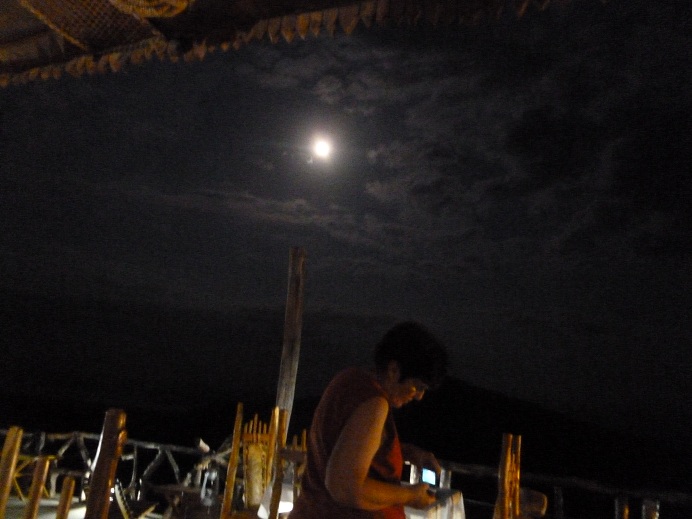
A moonlight meal
A pleasant meal, on a moonlit night looking over the lakes at Arba Mintch.

Dominic Cartier

Nazret v Adama

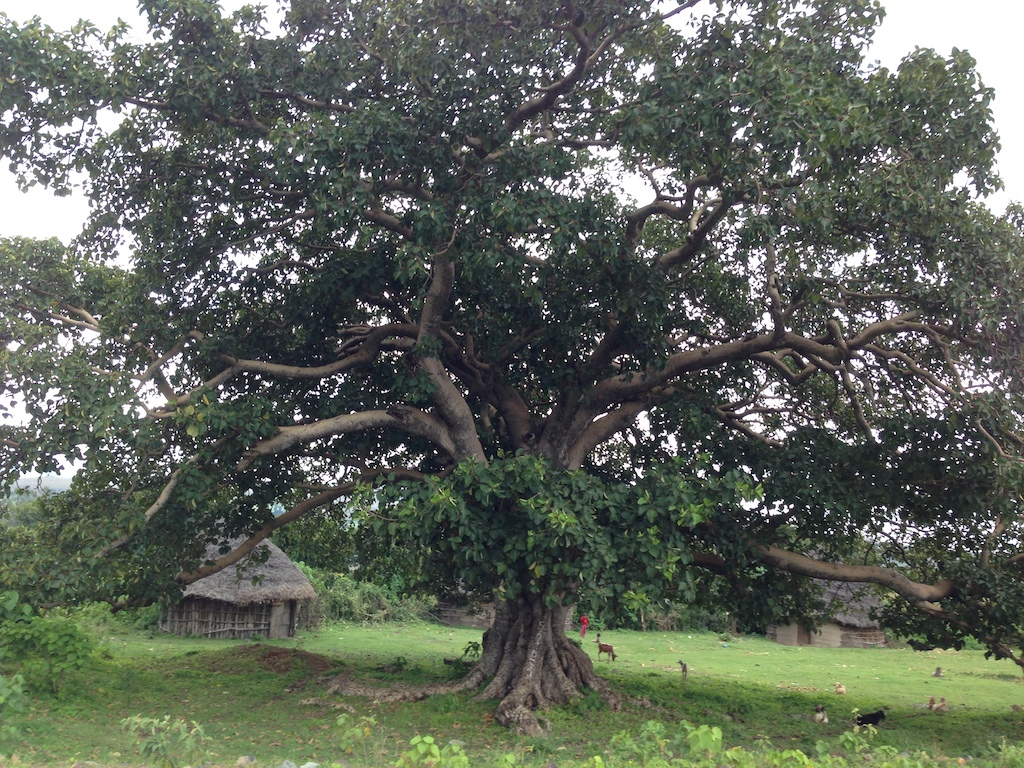
large tree

For many years the rulers of Ethiopia were from the Amhara tribe. Their religion is orthodox Christianity and they changed other tribal names of towns and areas to suit their desires, often to Biblical names. With the several changes of government over the last nearly 50 years many names have been reversed to their former names and Nazret (Nazareth) is again Adama.  (The Oromos use a lot of doubling of letters to show how long a letter is to sound. They spell it Adaamaa). Is that of significance to this post? Well, yes it is. With the rise of tribalism, local people were put into positions which had previously been filled with Amharas, that is members of the then ruling tribe – not that they either were always a perfect fit for their posting. The replacements were not always well qualified. Thus the CEO of the Nazret hospital was now from the Oromo tribe. The young surgeon who wanted me to come was an Amhara. The Oromos are an Islamic tribe in the main. So when I was brought before him, the question was why he should allow this foreigner into his hospital at the request of an Amhara. There was not open hostility but below the surface suspicion.

My friend had told me that the boss had had several unsuccessful attempts to have a large umbilical hernia repaired. The hernia was visibly bulging through his shirt. So, somehow or other, it became the conversation piece. Eventually I persuaded him , if I could get a nylon mesh imported from Australia, to allow me to repair the hernia again. I promised him a 98% success rate. He agreed, and I was allowed ‘in’ to help my friend. His operation went well.

Note – in fact promising 98% sounds good but for each individual the outcome of a complication is either zero or a hundred percent. You get trouble or you don’t. He didn’t, so everything was okay for me after that. He was a happy, now cooperative, customer.

In fact it hadn’t been easy for me to make the decision to go there. Prior to meeting  the CEO my wife and I had gone down, on a public holiday afternoon, to inspect what was involved. The wards were much like most Ethiopian hospitals; the surgeon was obviously trying his hardest without a lot of administrative cooperation. Not that they were against him but they had no real understanding of how to run a hospital.

But, as a surgeon, I was particularly interested in what the operating rooms were like. And seeing what we saw it was a hard choice to agree to work in them. There had been a procedure done the night before. The room had not been cleaned up; there was dirty linen on the floor and a considerable amount of blood about. A window was broken and there were flies feasting on the tasty morsels which they could smell and easily find. So in choosing to go I undertook to do and to get done quite a bit before my first operating list.

or rom copy
Their operating room was much worse than this!

The school at which I taught part-time Because of Bilingual Canada had a rule that the year 10 students had to have a civic experience in the community for a couple of days during the school year. That year I bought some materials, and the students with the day workers from the school all came down and the windows and screens repaired, a decent setup for pre-operation scrubs put in place, the OR complex was painted and an emu parade performed over the hospital grounds to clean up the very messy area. Thank you, school.

Adama has a population of about 500,000 and an elevation of just over 1,700 metres (nearly 6000 feet).

Dominic Cartier