The joys of the simple life

13D338E1-76A7-4810-BD4D-223504F71474_1_105_c
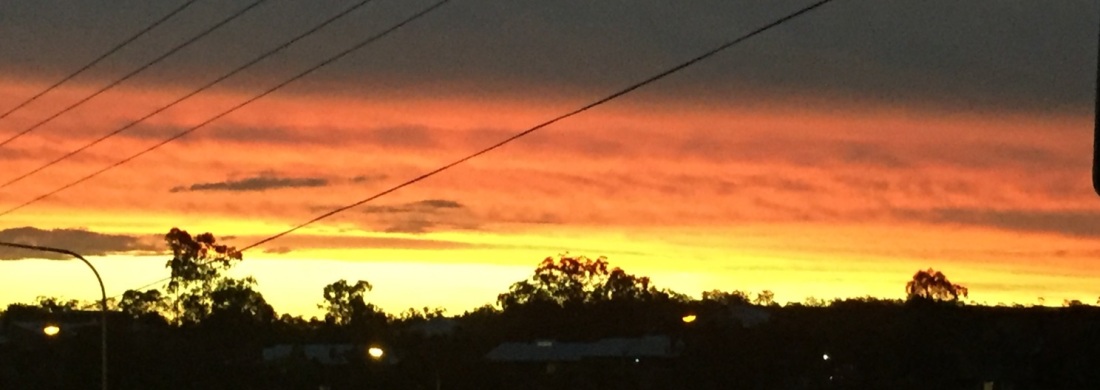
At least you get to see the sky in all its moods!

My joints don’t like getting down or getting up these days, so picnics on the ground are no longer fun. But here in Australia there are so many parks with excellent facilities that we can sit at shaded tables with gas BBQs even in most country towns. There are roadside toilets along the roads, and in many parts of Australia many stretches of road, with so little traffic that you can safely just go behind a tree!

Not so in most parts of Africa. Without going into details there were a number of amusing/trying situations.

We built two new toilets at the Leprosy hospital – septic systems.  An introduction to Life in Africa We had to employ guards outside them. If we put toilet paper rolls inside they were stolen. If we didn’t people used banana leaves or corn, neither of which septic systems are made to deal with. So we had guards posted on 24 hour duty, exchanging whatever for a generous issue of TP. (Maybe of interest is that the majority of Africans eating their normal diet, which is very high in fibre, have 2-4 bowel motions per day – hence the 24 hour duty roster for the guards!) Continue reading “The joys of the simple life”

Yakob

valley lake
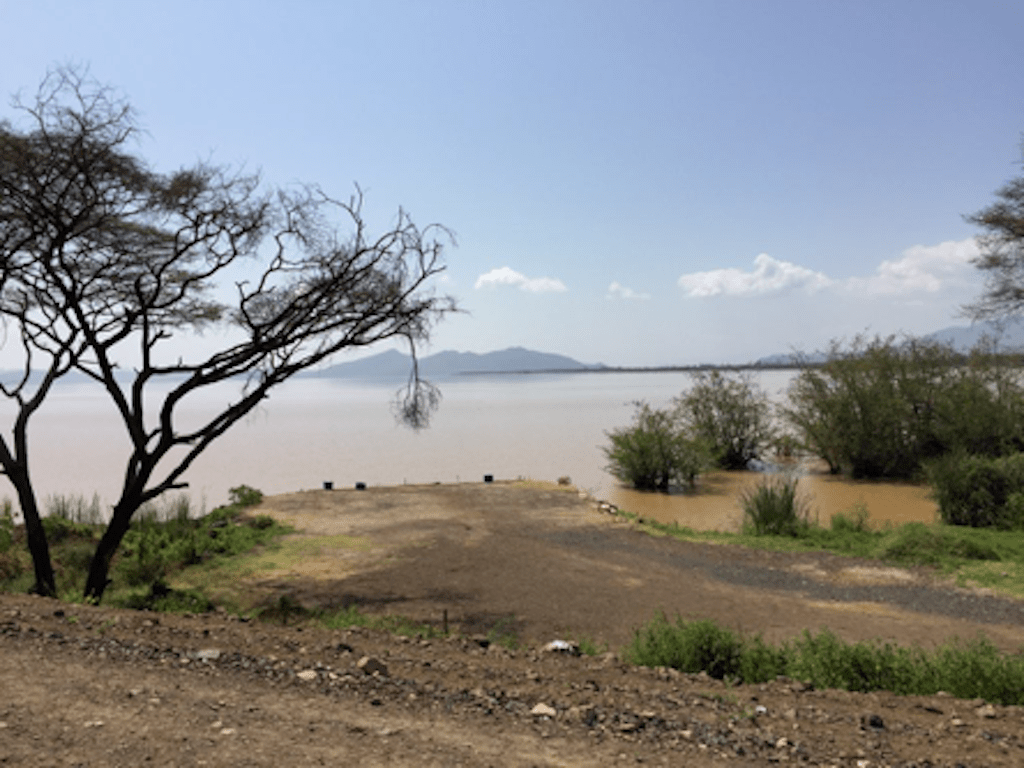
The Rift Valley has many large lakes. The leprosarium was on the  Eastern side of the Rift Valley

Well, young Yacob* isn’t young any longer. He has seven children and two grandchildren; he lives in Australia and holds a significant government appointment. He was offered an ambassador post in an African country but refused it. But he was just a school kid when I met him.

He was a mid-teen at that time. He was going to school, I think, in grade 3. After that He did 2 grades each year and eventually had to leave our area to do grades 11 and 12 in a bigger school. He was bright. Then he was forced into military service and eventually got to Australia with a bit of help. He had hoped to become a doctor but wasn’t allowed into medical school here.

But I didn’t meet him because of his studies. In the evenings and during the holidays he worked in the leprosy hospital operating room complex.  Working in a leprosarium 1968-74 There were, of course, others working there too. Most of them were treated or being treated leprosy patients. One had no fingers  but he looked after the sterilising system. Sterilising was done there for the whole compound – 2 hospitals with an OR each, and 2 outpatient departments. It ran almost 24/7. The nurse from the leprosy hospital came into the operating room when we were operating under a general anaesthetic to watch at the anaesthetic end, after I had put the patient to sleep. (This was at a hospital about 20 years before the time with the 3 teenagers). Follow up on Mesfin of the ‘3 Teenagers’ She didn’t scrub. If Yacob* was there he did. We didn’t have an assistant scrub also, so he had to do both the scrub nurse and the assistant’s duties. Often I didn’t have to ask for an instrument because he was watching, knew what I needed, and put it into my hand. He was good! I only had 2 people scrubbed with me for two types of operations – open prostatectomies and spinal fusions.

Later he did small procedures like suturing and removing dead bones from leper’s feet. One of our sons fell and cut his head while I was away. Yakob sutured it up.

We had a number of kids come in on whom we had to do tracheostomies (ie open into the trachea through the neck) because they had obstructed airways from inhaled foreign bodies – usually corn or beads. We didn’t have all the fancy instruments available to do it through the mouth. The problem was that after surgery they needed intensive watching with frequent aspiration of mucus through the trachy tube before we could remove the tube and let the wound heal. Maybe for 3 or 4 days. There was no other worker apart from him who would watch the patients overnight. So we used to bring a suction machine, an oxygen bottle, and the patient into our home lounge. We had a timer to wake Yacob* up at regular intervals and he slept on our sofa – all 6’3” of him! (For people with head injuries and with regular observations ordered if we happened to go back to the hospital – say at 2am – the obs would be written up until 6am, and the worker asleep.)

He knew 7 languages and in a hospital where they spoke 15 different languages, as the patients came from all the southern parts, he was often used as an interpreter. He was a great kid.

In Australia he became a nurse; did a bachelor and masters’ degrees in medical science; studied admin, and has been CEO of a rehabilitation department for over 30 years.

Surely he must retire soon.

Shash street
Street scene near the hospital – taken more recently. There were few cars in those days.

*Not his real name

Dominic Cartier

I know it is Easter but with no crowds!

If you feel lonely today – isolated – imagine yourself in one of these crowds or shopping in the street market at the bottom.

2017 graduation
Graduation Day Arba Mintch University. It includes the group of final year medical students that I taught. I think that I was the only white person there! I’m behind the camera if you’re looking for me!
A protesting crowd
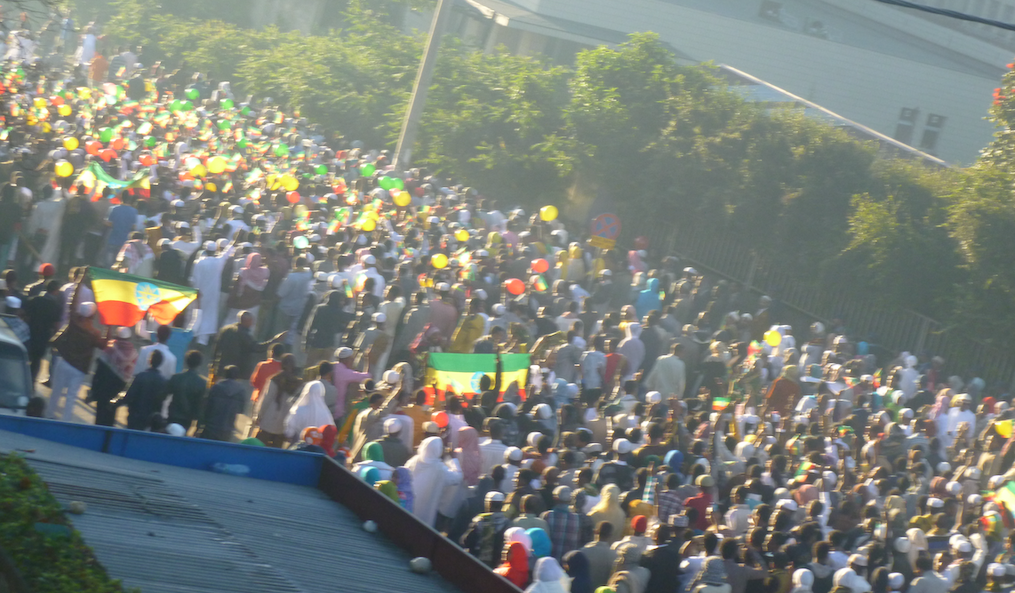
A march in Addis – it went on & on & on!

shopping

Have a great day with your imaginitis!

Dominic Cartier

The extended work – part 2

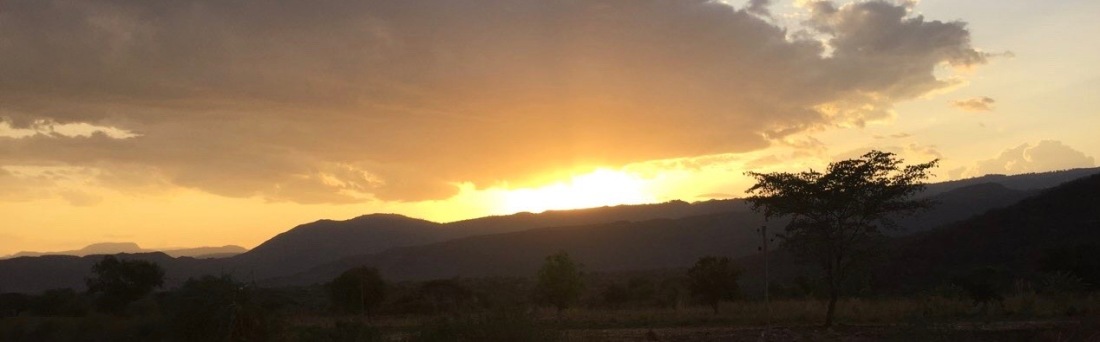
African sunset

I have posted previously about my time working in a leprosarium.   Working in a leprosarium 1968-74  And about a non leprosy medical work. The leprosarium extended – part 1 I mentioned there that was more to this other side of the non-leprosy work beyond the medical work.

The Other works for the general community consisted of the following….

A school with an enrolment of about 600 for the surrounding community. This only went to grade 8. A significant number of the pupils were mature age coming to school for the first time to learn the 3Rs. So in grade 1 you might have a six year old sitting next to a 21yo. Teachers were in such short supply that after 3 years as a student you had to become a teacher for a year, before returning to your studies. It seemed to work. One student who went to the leprosy school is now a professor of surgery!

A church with associated outreach. We were in Muslim poorly educated area. So many of our workers in all departments were people from different tribal areas and most were Christians. So the church was several hundred strong. They didn’t have hymn books but many, not being able to read,  had developed their ability to memorise. So they had a wide variety of hymns of which they could sing a number of verses. I remember how if a baby would continue crying the preacher would say “haven’t you a breast, woman?”

There was a small administrative unit consisting of the station head and a secretary. They among many other things supervised an electricity generator as often the government service failed. This was a major problem if we were operating at the time the electricity went off line. Operating by torch light while you waited for the generator to be turned on was not fun! But we always kept one handy.

There were mission and government reports to be written, wages to be paid, equipment, medicines etc to be ordered (much of it from overseas, and months in advance). I’m glad someone else had to do it! Continue reading “The extended work – part 2”

The leprosarium extended – part 1

African sunset

I have previously posted about my time working in a leprosarium. Working in a leprosarium 1968-74  I mentioned there the other side of the work carried out on the same station. As leprosy only rarely has acute problems I spent most of my time in the non-leprosy part of the program. I only regularly spent 2 half days/week with the leprosy program, besides seeing the occasional emergency in the leprosy department.

Other work for the general community – this post will only discuss the second non- leprosy medical work. There were several other aspects for another day!

There was an (officially) 30 bed hospital with an added 12 bed TB ward and an attached outpatient clinic.

It was the only hospital covering a large area and several million people. Through the country there were scattered clinics run by dressers (they were not to nurse standard but with some training, and had permission to prescribe a few simple medications) and a few mission clinics but the nearest hospital south was about 80 km away; north 200 km; west 150 km; east several hundred km, and this in a heavily populated, very fertile, part of Ethiopia. We were at the cross roads which led in all 4 directions. At that time cars were few and far between and public transport was limited. As loaded trucks often carried many people on top of their loads we often had mass emergencies if there were major accidents. And there often were!

It really wasn’t beds for just 30 patients. We used to put smaller children one at the head and one at the foot of the bed. In times of great overload we used to sometimes put patients on mattresses under or between the beds. There were verandas on the east and west sides of the main building and we would spread mattresses on them. Sometimes in the rainy season there would  be a rush to change the ‘veranda’ patients to the other side away from the rain slanting in from one direction or the other. Most people chose to go to the clinics or to natural healers before a percentage came to us. We could never have survived if all those who should have, had come!

This general hospital had a small ‘operating room’ which was mainly used for obstetrical deliveries which needed forceps deliveries. More major cases, obstetric or other general cases, were taken to the OR in the leprosy hospital. We had few normal deliveries apart from the wealthier women from the nearby moderately large town. For a normal delivery they were charged about ten times as much as a poor person with a complicated pregnancy – something about robbing Peter to pay Paul. Unless there were problems after delivery these ladies were allowed to stay about half an hour.

The room was also used to reduce simple fractures and for suturing. The leaded room with the X-Ray machine was attached to the hospital. The machine was an old WW2 field one. A local young man was trained to take the simpler X-rays. See an example of one of the chest X-rays below.

In addition to the 30 beds there was a 12 bed TB complex. TB was very common. Only the very weak or those with complications, like lung collapse or paralysis from TB of the spine, were admitted. Another national worker was trained to aspirate chests and put in chest drains.

The  outpatient department was in a separate building. It included our small pathology department. We treated about 100+ cases a day. Apart from acute emergencies, who were sent directly to the emergency room in the hospital, all were seen initially by a dresser. If they couldn’t make a diagnosis, or if the patient returned with the same problem, they were referred to the nurse. If the problem still remained the nurse arranged for them to see the doctor sometime. I, or if there were 2 one of us, tried to visit outpatients just before I/we went to lunch.

Emergencies were common. I remember one day when 3 ladies with ruptured uterus came within 5 minutes of each other! As well as daytime surgeries, planned or emergency ones, many emergencies arrived out of normal hours, so we operated most nights as well on emergencies.

The 4 nurses had the following duties: One was in charge of the general hospital; one of the leprosy hospital including the OR; one in the leprosy outpatients; one in general outpatients. If we had 5, the fifth was on night duty for all the work – if there were only 4 they rotated around taking responsibility for both parts of the work at night. They were very competent and really acted as junior surgical registrars.

Below the more line is a picture of a chest X-ray of a TB patient. Continue reading “The leprosarium extended – part 1”