More Old Cards.

I write a daily devotional, and must confess that I’ve been slack in being involved with this blog. I wanted to get up to Christmas with the devotional ( https://as-i-read-it.com ) so that as it gets busier at this time of the year I would be well prepared. Nevertheless the last post which I wrote for heated stew received a comment requesting a few more memories of old cards – so here goes, four more!
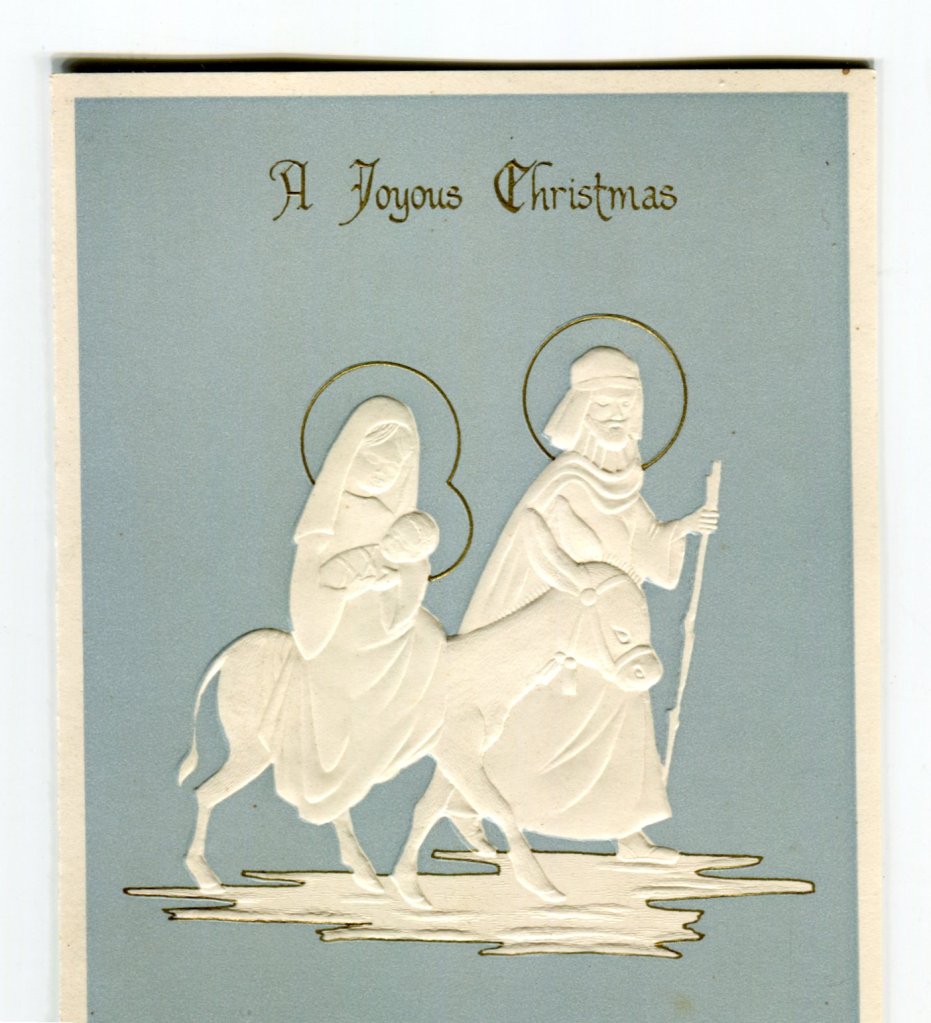
from a surgical colleague.

The surgeon who sent this Christmas card to me was the senior registrar when I was an intern being trained at the QEH in South Australia. Several years later when I had very recently obtained my higher surgical degree and was making plans to go to the mission field in Ethiopia I had a phone call from him. I had several months to get things sorted out and was looking for a bit of assisting work until my departure.

He, however, wanted more than that. He wanted me to be a locum for him for a couple of months. He was off work because of an injury. He had been called in to assist an Obs/gynae friend at a difficult operation. The other chap had cut his hand and divided an extensor tendon on one of his fingers! This put him out of action as a surgical operator for some six weeks.

Later on when I had to leave Ethiopia for health reasons and when somewhat recovered was looking for work I did a year’s locum – six months for him and six months for his then surgical partner.

While I was a medical student, there was a Billy Graham Crusade in Adelaide. I was a counsellor and amongst others had the privilege of counselling twin boys in their early teens. During the follow up of those contacts I got to know the family very well. The boys decision to become Christians took fire within the family. Their sister became a keen young Christian and the parents who for some years had stopped any church connection began going again. The father was a dentist and became my dentist for many years (I grew up on tank water and no fluorides and have had terrible teeth). The twins who are now well into their seventies and I keep sporadically in touch, and I read with interest comments which the sister frequently makes in Facebook. They have stuck with their decisions of that time.
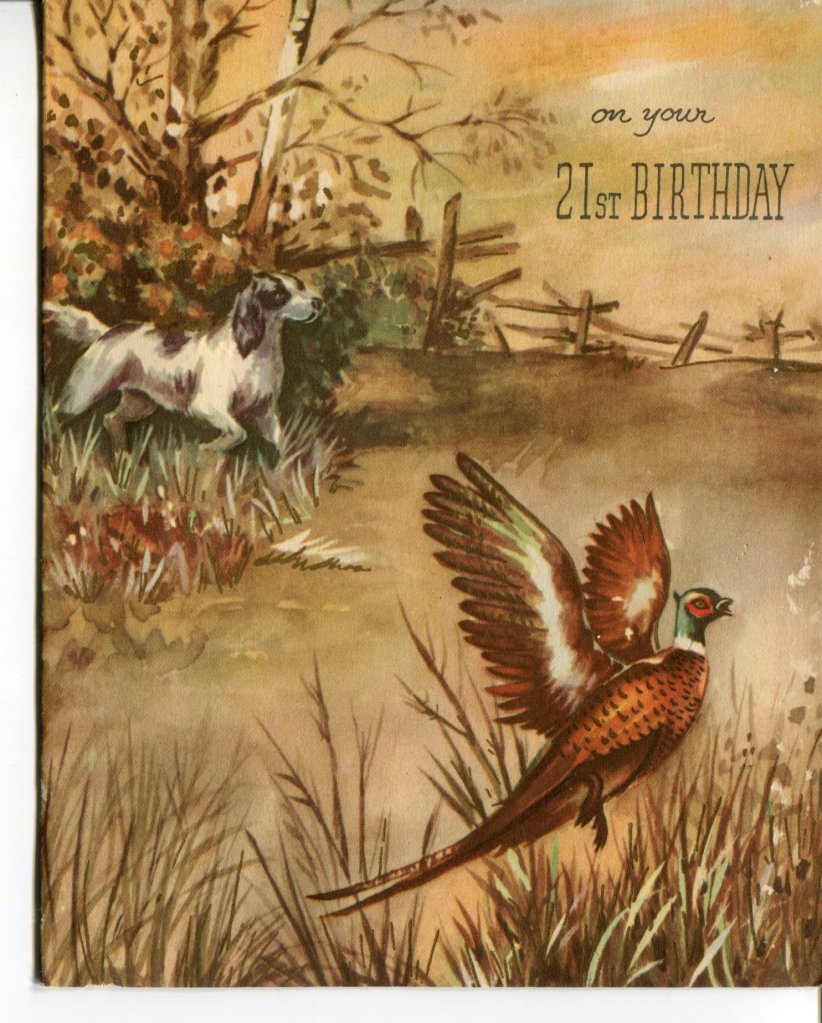
This card must have been written in 1960, for that was when I turned 21. I spent the day in camp with my National Service Training Group on the South Coast of South Australia. I was given the evening off and my father picked me up and took me to a party in the local institute near our home. I arrived back in camp about 2 AM, fell into a deep sleep in my tent and woke up late for duty the next morning soaked through and sleeping in a puddle as it had rained very heavily during the early hours of the morning.

But the card has many more memories than that it was sent by an ex-missionary who was a fellow medical student but years older. He had been in Ethiopia when the Italians invaded. He fled to Kenya and joined the British Army (he was a N’Zer) as a private, rose to be a Lieut-Colonel, and was at the end of the war appointed as Governor of British Somalia. He decided to go back and do medicine in order to return to Ethiopia and help the people. He never made it. He found the medical course difficult and just at the end of sixth year dropped dead from a heart attack, helping a neighbour pushstart their car. He was one of those who encouraged me to consider Ethiopia as a place to work.

A very simple card from a very dignified and knowledgeable Reader in Anatomy. He went on to become a professor. I spent 12 months as a demonstrator in Anatomy in his department when studying for the first part of my FRACS degree. There were 12 of us at that level all studying for our primary part of the degree. As you can imagine that as we tutored students, studied, ate together, horsed around, went to the local pub for Friday lunch each week, a lot of things were discussed. It became clear that only 2 of us had a commitment to the Christian Faith. Most were atheistic or agnostic. Two were Jewish. It was not a divisive thing but we all knew what our attitudes were.

We twelve were part of the 51 who sat the exam, which we knew had a high failure rate. Only 13 passed and only four were sitting for the first time. But my friend and I were two of the four who passed first time, and the only ones who passed from our group of 12. The other ten put on a party for us but complained during the hilarious time ‘It is not fair of God to bless those who believe in Him.’ I’m sure that many Christians have failed first time up but the statement is interesting!

Dominic Cartier.
It’s time to stop hoarding!

Something is often quoted about death and taxes being unavoidable. Well with both of us in the eighties and not working taxes are getting less but death is drawing nearer. My wife has kept every letter that I wrote to her while courting and throughout the nearly 59 years of married life plus all the birthday and Christmas and even our wedding cards. Fortunately of latter years we’ve been using computers. So they are still in her possession but much more neatly stored.

To give her credit she has begun going through the several metre high pile and transferring them from her desk to mine with the instruction that I am to destroy or keep them. And you think that it would be easy to just pick them up and throw them in the bin, but I can’t help looking inside. And not, I hope boring you, I will share a few long forgotten memories. I have a pile of them in front of me and will just randomly pick up a few and share the memories.

Number 1. From the family with whom I stayed and for whom I worked for several long University holidays. They had a large farm and I drove big tractors, carried and stored many tons of sheaves of hay, carried wool bales.etc. I remember one day when the man, David, and I were transferring bales of wool. We were at each end both with hooks to stick into the bales and carry them. I was shocked when he said that the next one was too heavy for me and he picked it up on his own back and carried it to where we were storing them. I was about 20 and thought of myself as a well grown and strong country boy. I was humiliated but had awe at his strength. We kept in contact for years and both my wife and I attended his funeral maybe 10 years ago.

Number 2. When we returned from Melbourne, where I had been a demonstrator in Anatomy at Monash University to Adelaide our neighbours were a lovely family. But we lived in different worlds. I was a surgical trainee in a large hospital, the husband was a workers’ union representative. I had to have a tonsillectomy for a recurrent tonsillitis with quinsy. The wife said to me that she hoped it hurt like h*ll. And I had thought that we got on well! She explained that she was sympathetic but wanted me to be a very sympathetic doctor and this was a good opportunity to learn about the nastiness of pain. I was happy but she didn’t get her way because the removal of the offending tonsils and the chronic abscess gave me such relief that I was able to eat a normal meal the next day! We remained good friends for many years until distance drew us apart.

Number 3. When I was in the last year of medical school family friends who lived in the district but a bit out in the bush, called the doctor from about 20 Km away in the nearest town and then asked me, as I lived nearby, to come quickly. The husband had become unconscious. By the time I arrived the unconscious man had regained consciousness but I, on examining him, found an ‘up-going’ toe on one side, which indicates the possibility of some brain problem. By the time the doctor came it was no longer present and I think that he thought that I had made a mistake. so he just reassured them and left. That night the patient had a massive stroke and was greatly incapacitated for the rest of his life. The doctor said to me later that he was sorry that he hadn’t taken more notice of what I said. It may have been preventable with urgent action. He was a good doctor, but we all make mistakes, a very costly one on this occasion.

Number 4. This one was from an Uncle, my dad’s brother, and his wife. They are both long dead. They had no children and I think that I was the only nephew/niece that ever visited them. In his wife’s presence he told my wife and I that when he died he would leave us his house. He died first and of course the home went to his wife. When she died some years later, she left it the cat’s home. She had a lovely old cat of which she was very fond. I hope the home let the cat die in luxury. The Aunt left us a tea set, which we still have and it is very nice.

Well there are a million more cards but that’s enough to show you what I mean!

Dominic Cartier.

Looking carefully.

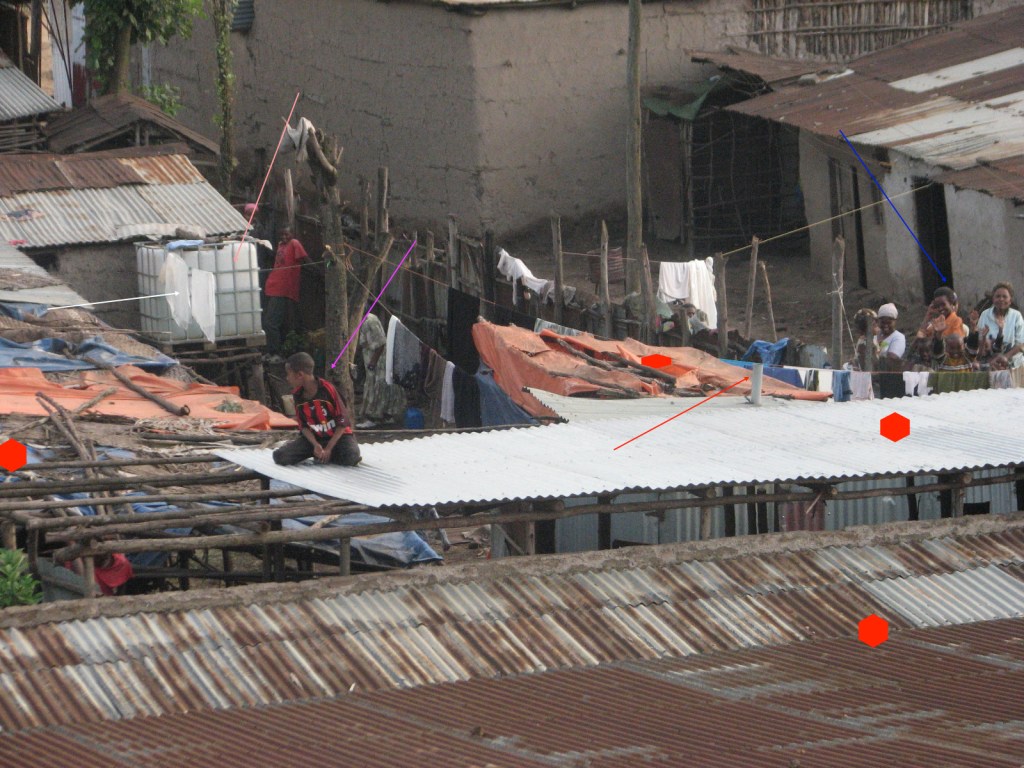
When I have not much to do, which is more often than it should be, I love looking through old photos and reliving experiences. Today’s picture could have been taken in any of the cities in which we lived in Ethiopia. I’ve tried to mark some things which reflect the economy of the land, and I comment on them. Remember that the population is still about 85% rural which tends to be poorer than the cities.

  1. You can see the tall unmarked pole, which is either a telephone (unlikely) or an electricity one. But you cannot see any connections to any of the dwellings. It is passing through to a richer area, and there are some very rich areas!
  2. The pink arrow points to a water tank. There are no gutters visible. There is a water distribution throughout the city but it is frequently not available, so when you can, you fill up a reservoir against those times.
  3. The red hexagons mark the different standards of roofing, some of which are virtually non existent. They have periods of very heavy rains.
  4. The purple arrow marks an example of child labour. Sheets of iron are being put onto the roof.He is obviously a teenager but often you see little kids carrying far too heavy loads and with great responsibility – often carrying babies on their backs or with loads of wood on their backs.
  5. The red arrow shows the outlet above the communal toilet. People often shower over the toilet or under a spray in the open. From personal experience you try to not need ‘to go’ when visiting these places!
  6. The blue arrow marks a group of ladies in community. You can see their beautiful white teeth, as grinning they look up to where I am taking a photo.
  7. The white arrow indicates their love of cleanliness in the midst of difficult circumstances.Their white clothes are sparkling!

Dominic Cartier.

The continuing war of oppression.

I listened last night to an economist presenting a lecture on why and how the ‘western’ world and China wants to and does keep sub Saharan Africa under their control and in relative poverty. The main thrust of the paper seemed to be that Africa is a prime source of fundamental needs which Industrial countries must have and so at all costs Africans are to be stopped from becoming industrialized so that they could use their own resources. They do this in a number of ways but to a large degree by providing aid and loans, with strings attached, which make the provider the master. In addition if they can get the ‘right’ people in power that also makes the job easier by subtle use of bribery and corruption. If you wish you can listen yourself on Youtube – ‘Underdevelopment’ in Africa – What’s the real story? by Howard Nicholas. An Associate Professor of Economics in the Netherlands.

At the end after marking ‘watch if you want to’ some nastier medical photos but prior to that just some of the poverty photos which are so common.

hospital beds
Main lecture theatre for clinical surgical students in a major hospital,
with its modern facilities and space! We had about 60 people in this room five days a week!
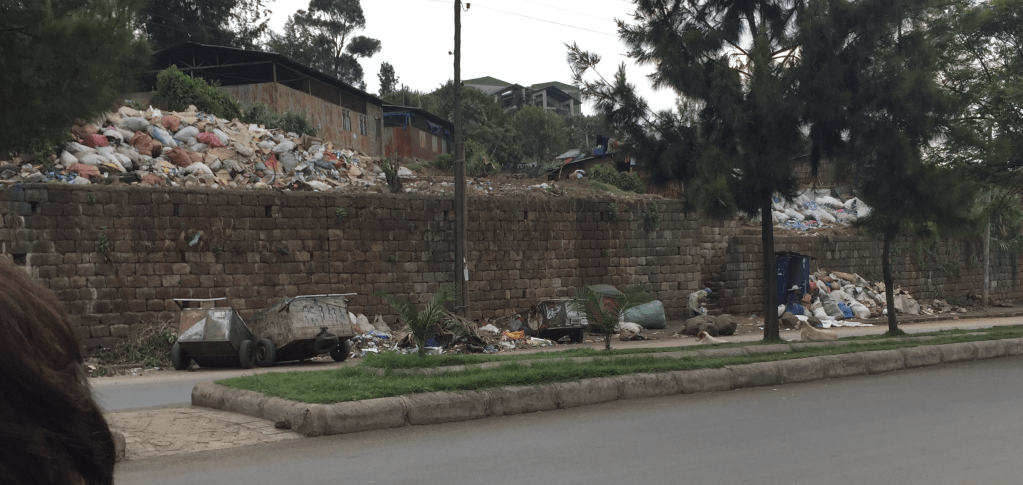
major roadside in Addis Ababa
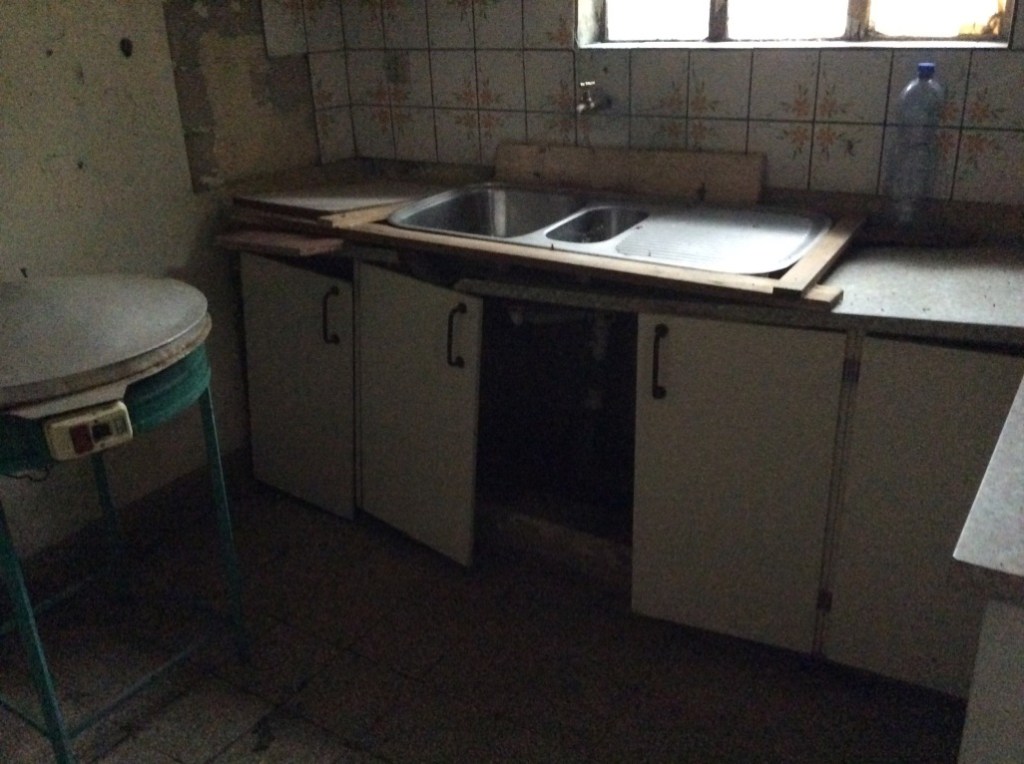
House offered to a doctor working in a major University hospital
The kitchen in the house!
This picture shows the world wide situation. It obviously affects lives lost and the health of the workforce as well as the economy.

Of course I could show you many beautiful buildings and better roads, but most of them, although seen as a solution, are part of the problem, as they have been built by aid and include the debts owed which keep the population under control. They are in the cities where only about 20% of the population live. 80% of the population are rural. Many are without decent roads, transport, electricity etc.

Continue reading “The continuing war of oppression.”

Chopping down the tall poppy.

It is often said of Australians that we try and diminish people who stand metaphorically head and shoulders above the crowd. We cut off the tall poppy.

We recently had to get some trees lopped to allow the sunshine onto our solar system!

Today I want to build up one considered a short weed. Physically he is not big, except in his heart! I met him about 28 or 29 years ago, when he was a teenager. He was a double orphan but in the government hospital where I was working as an astermame (like a carer) for another teenager with whom he had grown up. His friend was also a double orphan. He slept under his ‘brother’s’ bed, emptying bedpans and feeding him because the other boy had very nasty infections in both elbows.

The hospital staff were angry at me because I had increased the occupancy rate of the hospital from 5 when I arrived to about 120. It was a 120 bed hospital. They invited me to go home because they only got the same government wage for doing a lot more work. In addition to verbalizing their discontent they were very uncooperative. I had to wheel the trolley to collect patients for their operations, load them on myself and push them to the operating room and lift them onto the table. I organized a highly intelligent young man (employed as a cleaner) to watch over the anaesthetics after I had put the person to sleep. Two nurses worked in the operating room and were on the whole cooperative. But after recovery I would have to repeat the process in reverse.

As soon as he heard the wheels of the patient’s trolley moving, the young boy of whom I am writing, would run to help me push the trolley. Eventually we adopted him and that in itself is quite a story. There were many hoops to hop through to get him to Australia. At High School he had his zygomatic arch in the side of his face broken because a lot of the other coloured girls thought him very handsome and some of the other coloured boys beat him up! He couldn’t open his lower jaw. Just as well his father was a surgeon!

He was never a good student but he stuck with it and eventually obtained a diploma in aged care. In the interval before getting his diploma he was never without a job. He is a terrible speller; his grammar is at best basic but he copes very well at a conversational level and does his job well.

I think in many senses he is a tall poppy.

Dominic Cartier