When to leave the training nest?

M family home

If you start school aged five; then spend 7 years in primary school; 5 years at high school; 6 years to get your undergraduate degree; another 6 years to get your postgrad degree – how much more training do you need before you venture overseas? The answer isn’t all that simple. Some leave for further study; some go to work in very supported environments. I knew that I was heading into a pretty primitive situation. At that time there were 42 Ethiopian doctors in the world. All had trained overseas and 28 had remained overseas. The population of the country was quoted as 30 million. Including the 14 Ethiopian doctors there were said to be 300 doctors in Ethiopia. A disproportionate number were in  three big cities, Addis Ababa, Asmara and Jimma,• whereas the rural population was said to be 95% of the population. There were very few specialists. There was no training school for doctors in the country at that time.

A small, but significant, percentage of the 300 doctors were missionaries. Our  mission organisation alone had 5 hospitals, two with no doctor much of the time, but run by nurses; that is they were basically clinics. Between the other three hospitals we had a stable base of five doctors plus occasional very much appreciated short term help.

The medical advisor to the government of the time called the missionary doctors to a meeting. His opening statement was that he was an atheist and that when he came to Ethiopia he had no time for missions. But he had found that, thinking medically, missionaries had 10% of the work force and did 90% of the work. He then went on to discuss his plans for the future.

Returning to the thought behind the title of this post – what are the main medical needs in an underdeveloped country? So how much training should you undertake. The medical problems there are in many ways different from those in the West.

To make a list of their major needs: –

  • Paediatric – high mortality  up to five years old.
  • Obstetric care – perinatal infant mortality, maternal mortality, vesico-vaginal fistulae, ruptured uteruses.
  • Tropical diseases – malaria, leishmaniasis, leprosy, TB.
  • Surgical – emergencies, trauma, bowel obstructions. All those conditions we see in the West except fewer cancers. Surgery needs anaesthesia.
  • Medical – very little heart disease, and very little diabetes; many public health issues, many infections.

There were very few investigations possible. There weren’t referral clinics.

I don’t know that it was at that time part of my deciding to go with limited surgical experience, but, in retrospect, I’m glad that I went when I did . That is, that I didn’t stay long enough to become overly dependent on investigations. They weren’t available.

At any rate, inexperienced as I was, I went early. I did my first obstetric and gynaecology operations there. I did many other operations that I had never seen; using textbooks, reading up before and, even then, often with a book open on my old violin music stand in the operating room, with a worker turning pages as needed. Maybe I was a bit of a cowboy; maybe fool hardy; maybe too self confident. But even in retrospect I don’t think I had a choice, even if my only consolation is that I was, I hope, better than nobody. And thank God I wasn’t alone – a wife, a few nurses and some very committed national helpers. And I suspect God played a part.
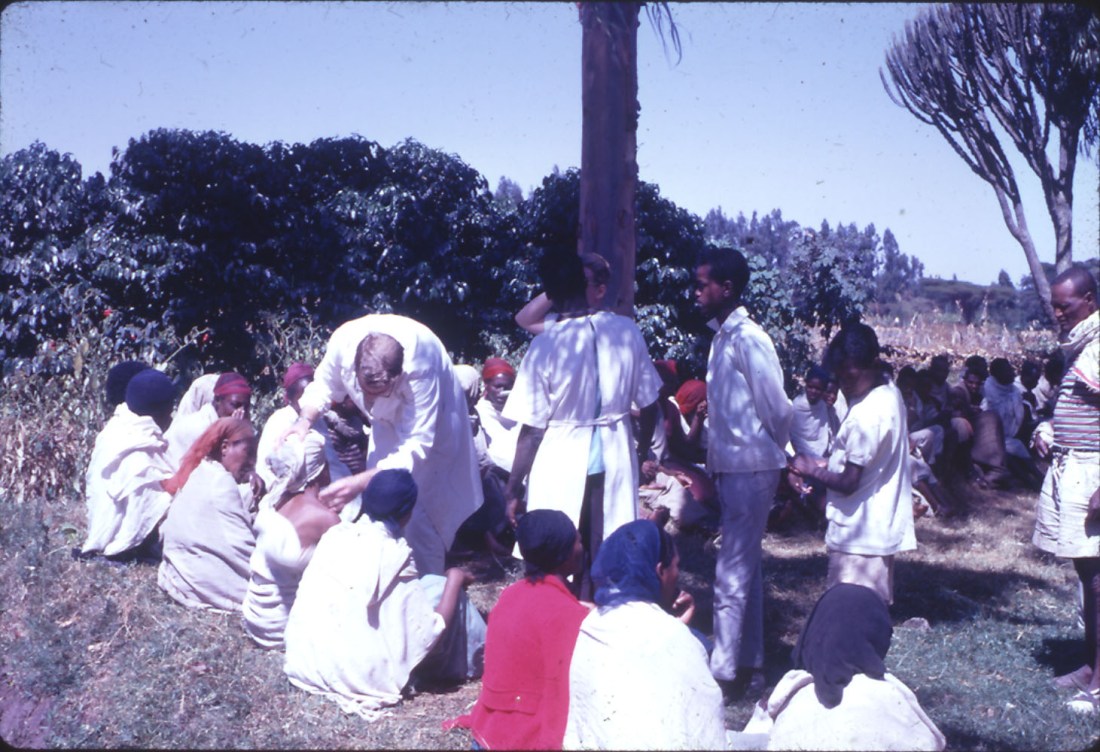
outdoor clinic copy
A leprosy clinic ‘under ideal situation’!

*Eritrea was at that time part of Ethiopia.

Dominic Cartier
Because of Bilingual Canada

African sunset

One of our sons, Anthony, was Director of a mission school in Ethiopia. The school was under the auspices of the Canadian government. Canada is officially bilingual and so the school had to teach both French and English. It was primarily a school for missionaries’ children, but, by government decree it could have other students who held foreign passports. Many were children of people associated with the UN or Africa Unity. There were a few Ethiopians, like the ex-emperor’s granddaughter, who had foreign passports.

Meanwhile whilst practising in Australia, upon reaching 65, I retired.

The school lost its French teacher. She was to get married. They tried to find a replacement but without luck. It looked as if the school might have to close. I was, as I said, retired; our son remembered that I had learned French at High School; he pressured me to fill in for him until they found another French teacher. I had used my French a bit when working in French West Africa. Reluctantly I agreed. I guess he realised that as I had been involved in teaching surgery for years that I should be capable of teaching High School students. The government gave me a visa as a teacher.

So for two years I was year 10 home room teacher and I taught years 8, 9 and10 French; for one  year grade 8 science; and for both years year 10 Bible. I don’t know if the students enjoyed me, but I enjoyed them! This occupied my time 4 mornings a week.

Initially they were a bit terrified of being taught by the Director’s father. But I’m a bit of a softie and soon I was treated as any other teacher. They had a healthy respect for the Director.

At the end of year 10 they had an international exam and I’m pleased that none failed French. Each year 50% got A or A+. I suspect their brightness rather than my teaching got them there.

Two of my ex-surgical trainees, by now surgeons, got to hear that I was back in the country and they pressed me to help them a bit. So that 3 afternoons per week I worked with one of them in a hospital in the capital. On the Thursday after lunch I travelled 100 km south-west and saw patients whom my other friend had lined up for surgery, then we did a teaching round. On the Friday I operated all day, then, on Saturday saw the patients who had been operated on the day before and travelled back to Addis.

I had planned to return for a third year but during the long school break was diagnosed with cancer. As you are reading this, you can see that the treatment was successful.

I still keep in contact with some of them. It makes me feel old when I hear of their marriages and of them parenting their second and third kids!

Dominic Cartier

Abraham

13D338E1-76A7-4810-BD4D-223504F71474_1_105_c
At the end of the day – I’m happy with the result for young Abe!

If a kid is in hospital under your care for a year you get to know him well! I got to know young Abraham very well. I did a number of operations on him, and my wife brought him and his father to Australia for some very delicate surgery, which we couldn’t do there. A church here in Australia paid the airfares and an ex-Ethiopian Australian gave them a house to live in, while in Australia. Two colleagues of mine did surgery on him. They did it free and paid the hospital bill as well.

He was a little boy; he didn’t go to school; he played on the roadside. He was knocked over by a car, fell under a cotton picking machine and was mangled from his lower abdomen down to his knees. His father stayed with him all the time he was in hospital. We saw the mother and rest of the family occasionally.

His injuries were extensive; a fractured right femur; the skin and fat sheared from all of his left thigh down to muscle; his penile and scrotal skin were torn from their normal position but survived and could later be re-used; he had a cut running right between his legs taking out part of his urethra and splitting his anal canal in two. He was obviously in severe shock. Continue reading “Abraham”

Bites 2 – continuing the list.

Monkeys – we didn’t see a lot of monkey bites. There are of course many different types of monkey. In one place where we lived there were dozens of them. We had a lot of bananas but, against what we expected, they rarely ate them. They loved our guavas. There was a large tree abutting the back of our house. They would steal as many as they thought they could hold, run along the roof ridge and, no doubt accidentally, dropped some as they ran. Those dropped would clatter down the tin roof into the gutters; which was annoying, particularly at night! They would sit on the window looking through the bars, and you wondered who was looking at whom!

monkey
Who’s watching who? -At our kitchen window.

Guereza monkeys, brilliant with their black and white colours, leaping from tree to tree were gorgeous to watch. Staying for a break at the one of the Rift Valley lakes we saw lots of those monkeys with ‘painted’ backsides. They were thieves, watching carefully and awaiting the moment, they’d jump down and steal food from your table or even your hand.

Hyenas – people think that these are only scavengers, but they are prepared to attack living animals or humans. They can cause rabies. At night time our workers would not walk alone. There were always at least 2 or preferably more of them and armed with dullahs (heavy sticks) when walking outside..

The two cases which stand out in my mind are of two boys who came in (at separate times) both having been scalped. (photos below the ‘more’ line) The bone on the top of their heads was laid bare over many sq cms. You cannot graft onto bare bone. We had to drill multiple holes through the outer table of the skull, being very careful to not go right through the inner table of bone. The tissue in the centre of the bone (the marrow or medulla) granulated out through these holes and when it had covered the bare bone totally we could skin graft it. Both boys eventually did well even if they were prematurely bald, and needed to wear protection to protect their grafted skin from trauma and the sun. Thin (split) skin grafts don’t become normal skin again.

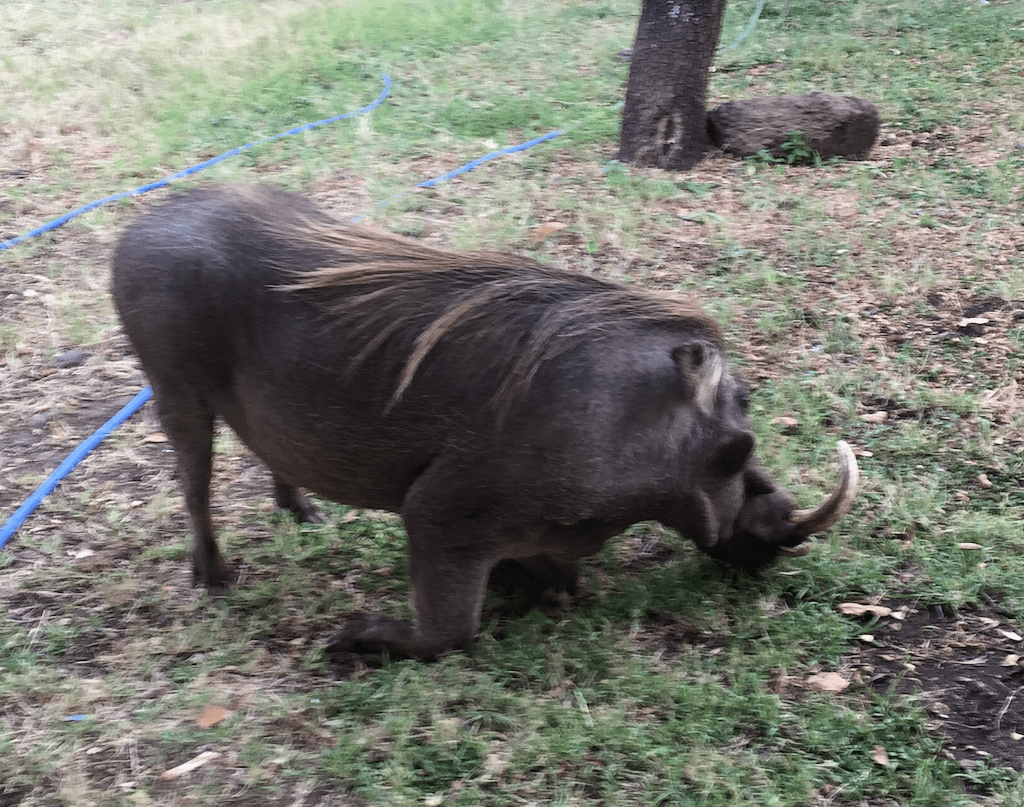
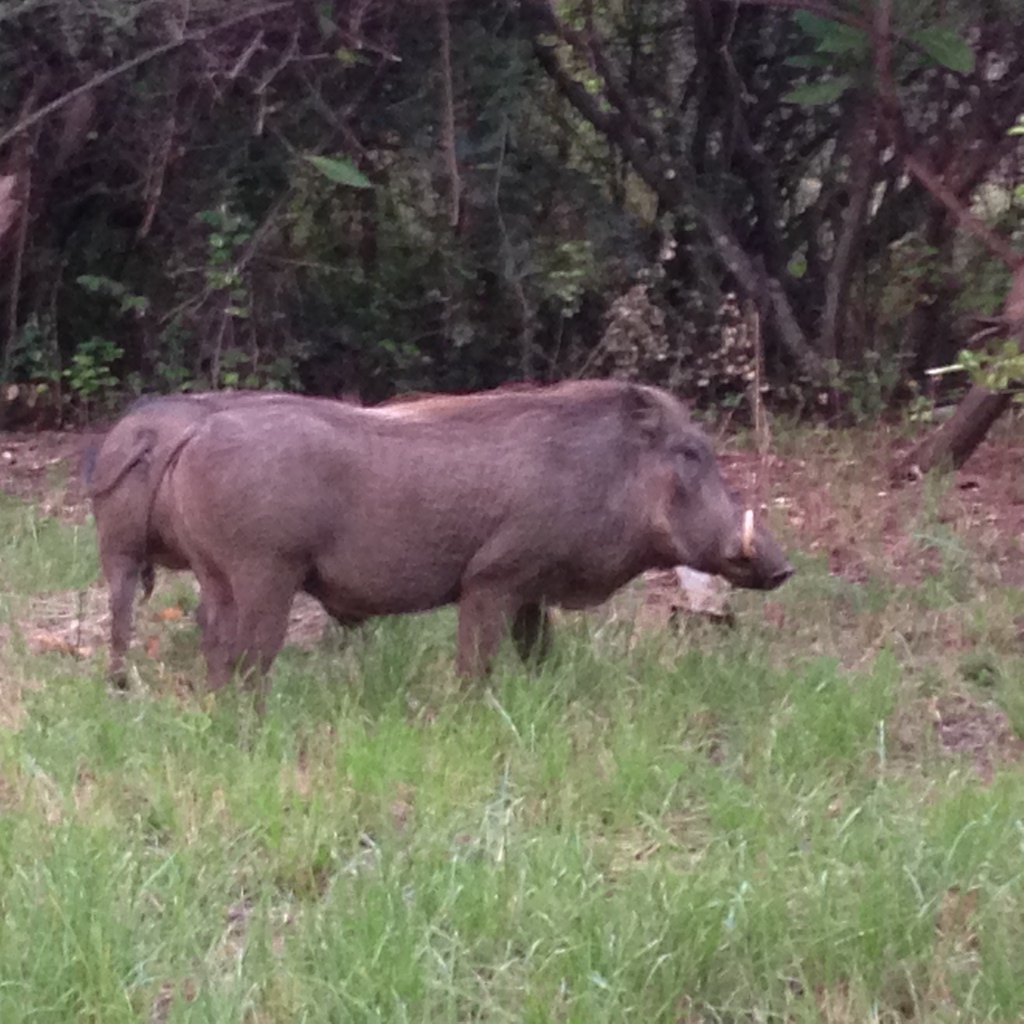
Wild boars (called kekero there). With their long tusks and bites they could tear skin and do a lot of damage. We had some that visited us daily in our garden. They learned how to turn on the tap in our back yard using their tusks – in order to get a drink. I wouldn’t have minded if they had only thought to turn them off. The locals told us when we arrived at that University that rhinoceroses came every afternoon. They got it wrong. We never saw a rhino but daily had boars visit us.

Untitled


Crocodiles  are very common in the Rift Valley lakes. Crocodile teeth tear the skin and shatter the bones. We saw a lot of their bites as the people fished from very flimsy balsa wood boats.

croc

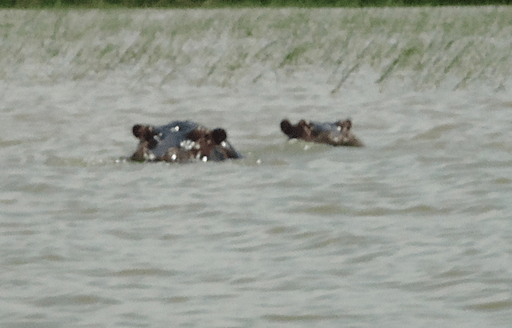
Hippopotamuses- I clearly remember a number of hippopotamus bites, all very dramatic. The story of one boy is fascinating. The villagers were short of meat and decided a hippo would be good meat. Half the village got behind him and half on the other side; many with spears. Those at the back began to drive it forward. It began to move. The others were ready. The hippo saw them; didn’t like what he saw; began to charge at full and frightening speed. The villagers fled but this boy slipped and fell; the hippo was on him. The villagers killed the hippo and probably enjoyed the meat. The boy was brought to the hospital. He had a big gash on his chest, exposing but not breaking his ribs and a cut slicing his left buttock in two and the cut extending to the back of the knee. It was deep enough to expose the sciatic nerve, over a long segment, but did not divide the nerve.

hippos
We didn’t like getting too near hippos – they charged at you.

Another hippo bite that comes to mind is when a woman was leaning over near the edge of a lake doing her washing. A hippo came up behind her and bit her buttocks from top down laying them as if it they were an open purse. Fortunately  it was mainly skin and fat and was repaired fairly easily.

Dominic Cartier

Some hyena bite medical pictures below the line Continue reading “Bites 2 – continuing the list.”

Bites 1 – garden and domestic

boars
These are some of the ones which came into our back garden and  who could turn on taps!

We all get bites at some time or other.

Insects bite are probably the commonest and they cause lots of problems. There are thousands around the world who die every year from malaria. The enlarged spleens which they often get make them more prone to getting ruptured spleens from traumatic episodes. There are also other nasty mosquito spread diseases. Ticks also bite and they can cause a variety of diseases. Scorpions –  their stings cause severe pain but usually not much else. Young children may get worse reactions as a few varieties are venomous. Injecting directly around the site with morphia gave the quickest and best results. You quickly had very happy customers. The above almost always cause medical diseases although there can be complications requiring surgery, and I’m a surgeon – so I tended to deal with bigger mouths and more traumatic bites.

Snakes – Their bites are not consistent in how they behave; that is they are either venomous or non- venomous, and there are a variety of venoms. The non-venomous just give you a nip without poison – scary but these are really a fairly minor issue. The venomous ones  have a variety of ways of causing major problems. Among them are neurological problems, bleeding diatheses, tissue death, allergic reactions, kidney failure. It is nice if you have specific antivenins available depending on the type of snake, but our patients tended to arrive late, and antivenins are much better if given early. The polyvalent antivenoms which we held in stock were not as good at any rate. The major problems we saw were of tissue damage with massive swelling needing splitting of the skin to relieve pressure, and often cutting away the dead tissue. Amputations were occasionally necessary, but more often we could cover the dead areas with skin grafting. Continue reading “Bites 1 – garden and domestic”