

You may not want to read more if you’re a bit squeamish! But it isn’t as bad as many kid’s TV programs – except that it is real. I really loved the kids I dealt with!
You may not want to read more if you’re a bit squeamish! But it isn’t as bad as many kid’s TV programs – except that it is real. I really loved the kids I dealt with!
Pandemic limitations have reduced the numbers at funerals, but have also made it possible to attend (or at least listen to) funerals without travel. In 1968 we arrived in Ethiopia. The man who had been station head at the time when I had to leave in 1973 for health reasons, had a funeral last Saturday in Canada. My wife and I attended the ceremony. Well, not quite, but we watched it on U-tube last night.
Seventy years earlier he had travelled by ship with two other young men for their first term of missionary service. So it was interesting to remember not only my contacts with the man who had died but also with the other two.
The dead man had married a beautiful lady and by the time we knew him had 4 children. He was a good leader, but what I remember most was that his youngest child, a daughter was about the same age as our oldest son. We had a platform type swing in the front of our place, and his daughter and our son used to, during school holidays (they both went to boarding school in Addis) stand at each end of plank, goggle eyed, swinging back and forth. Puppy love, I guess; nothing came of it.
Some years later I met him again in Addis. He had remained in Ethiopia in an Administrative role during the time of the communist rule. I visited during that time for the Australian division of the mission. I wanted to visit my old hospital but was forbidden. Everyone thought that it would cause a riot. But, I did need to do a bit of travel in Addis. I did not have an in-date Ethiopian licence. One of his sons, who had a licence, was out visiting him. So my friend offered his son as a driver. His licence had been obtained to drive automatic vehicles. All the vehicles available had stick gears. I’m glad that the traffic wasn’t as busy then as it is today. It was a scary ride, but we did arrive both ways without an accident.
I knew one of the other men quite well but the story is second hand. Much later he and his wife adopted a young Ethiopian girl. I can’t understand how but the Ethiopian officials allowed them out of the country without a Canadian visa for her. The other end wouldn’t let the child into Canada. The guy, nice but a bit pushy, unsuccessfully argued with them for quite a while, but eventually put the baby on the desk and began to leave. ‘OK, she’s your problem now’, he said.

He was called back, some agreement was reached, and eventually everyone was happy.
The other guy with his wife who went with him on the same ship reminded me of a couple who were working on the Ethiopian-Kenyan border. There were poor roads, no phones, his wife as the only trained nurse in a nurses clinic on site; there was no other medical help available without travelling hours on terrible roads. They were so ‘out-on-a-limb’, distance wise and in political uncertainty, that the headquarters in Addis had radio contact with them each morning and evening. And describing the roads as terrible, I mean terrible, unmade, ‘mud-slides’ and rivers with no bridges to be crossed.

Late one Saturday afternoon the husband complained of abdominal pain, his wife assessed him as having appendicitis. It was too late to fly a helicopter down but the decision was made to get everything set up for action in the morning. A helicopter was arranged, and everything was planned to be able to leave in the morning if he was still unwell. After the morning radio contact we would make a decision depending on what his wife thought. She was still worried, so another nurse, and I set out with sterile instruments, sterile disposable drapes, a spinal anaesthetic tray and a strong torch.
We had two alternative plans in place. If there was a fear that it was far progressed we would bring him back on the helicopter so that he could be watched in hospital in Addis, after surgery; or if it seemed the correct diagnosis but an early case we’d operate there and leave him in the care of his wife.
We travelled down at low altitude in a glass bottomed helicopter. It was soon after the civil war had ended and the people were frightened of low flying air machines. As we passed overhead, the men and their beasts out ploughing took off helter-skelter, often the men in one direction and the beasts in the other, still pulling their ploughs. I don’t know why the pilot flew low; it wasn’t funny for people on the ground; but it looked so from above! And when I say that we flew at a low altitude, what I should say was that we didn’t fly far above the ground. Ethiopia is mountainous so we had lots of ups and downs so as to not hit mountains. I guess we fluctuated between four and ten thousand feet, altitude wise.

At any rate I decided (correctly) that he had early appendicitis so I operated on him on the kitchen table, using a strong torch for light (held by the pilot) and under spinal anaesthesia. After surgery we watched him for a couple of hours, had lunch and returned to Addis. The next morning on the radio his wife was asked how he was getting on. She said that he was in the garden watering. She called out to him; he was happy and said ‘Thanks for making house calls.’
Pathology proved the diagnosis correct.
Dominic Cartier

Why sad? I’ve so much to be glad about. My wife loves me; I love her. My dogs are lying at my feet. I’m enjoying a cup of coffee.
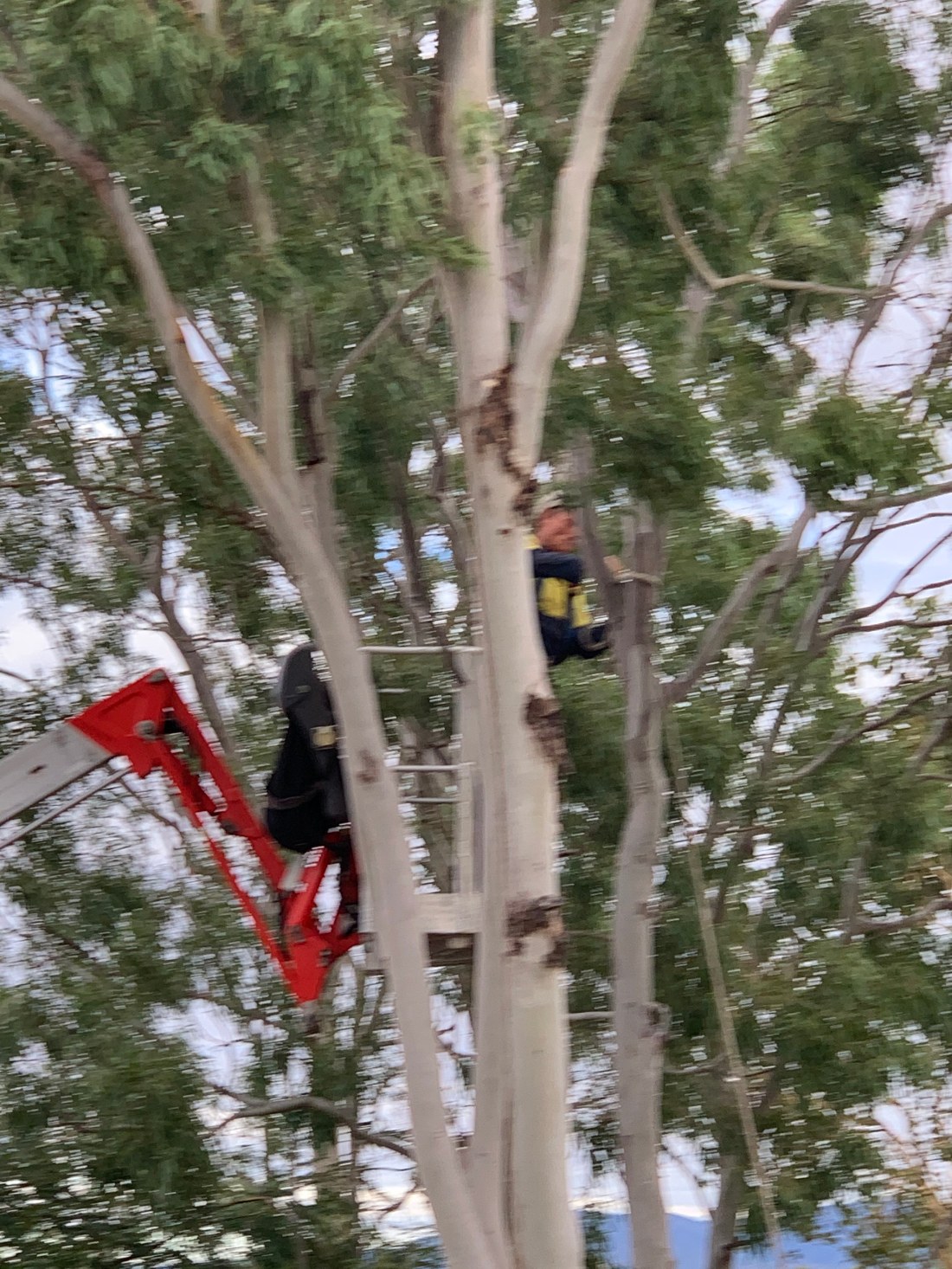
But I love trees and today we had eight cut down and their roots ground out. They took many years to grow. They weren’t sick. They were in the way. Electricity has become so expensive that we’ve had solar panels installed, and they stopped the sun shining onto the panels in the afternoons.
We have a heap of mulch which will make my gardening wife happy, but I’m sad
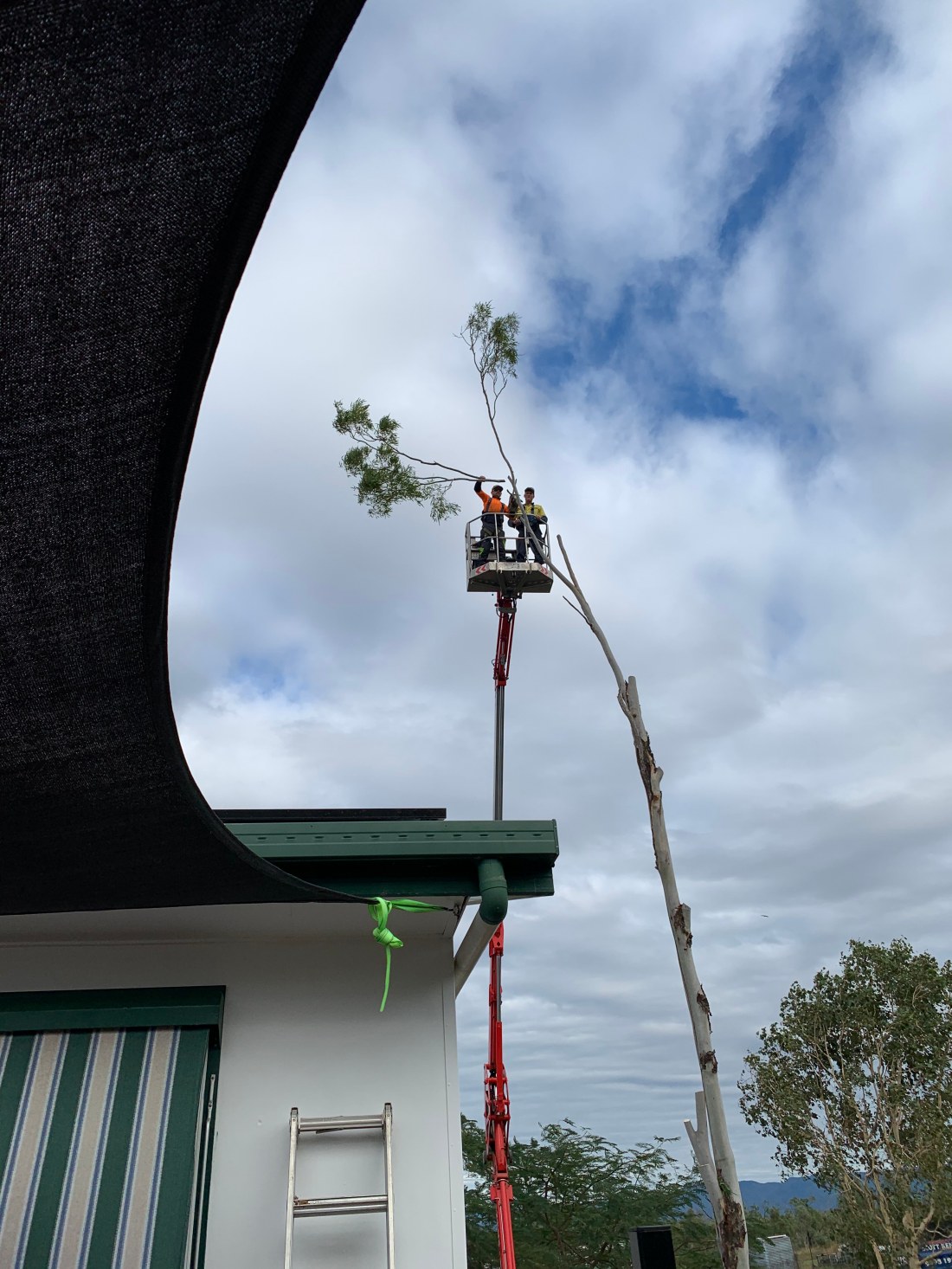

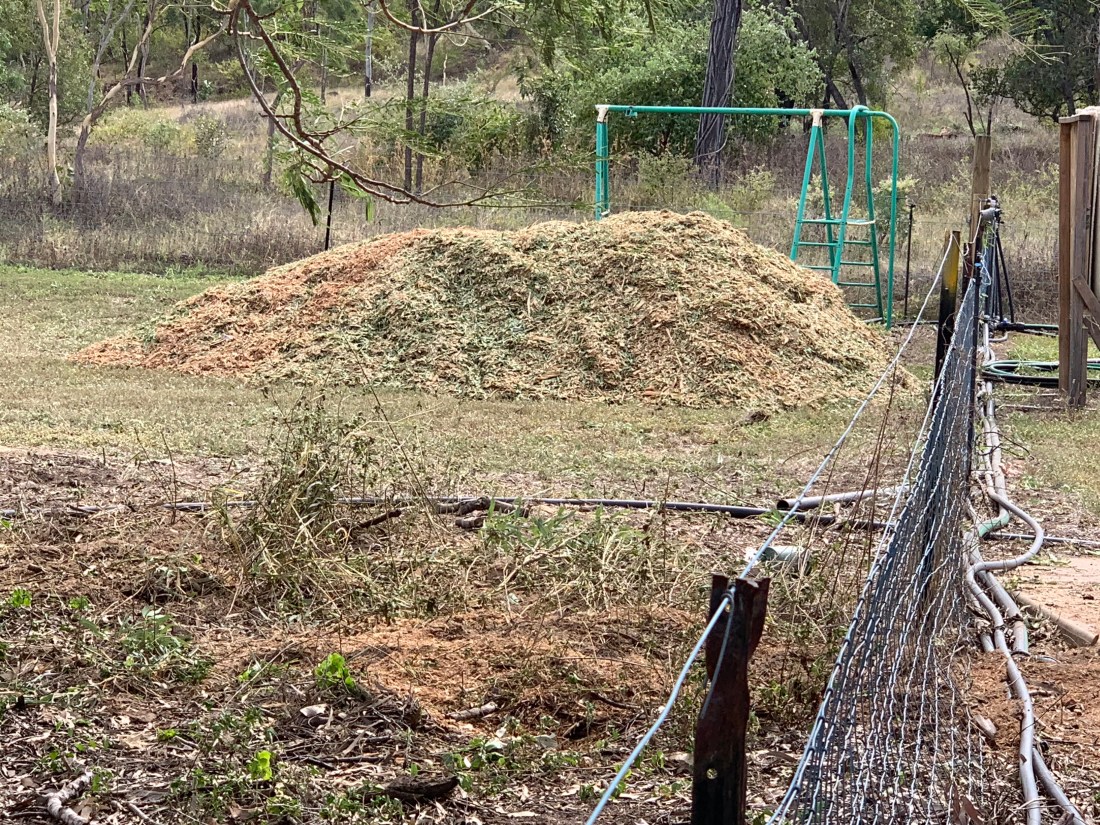
I guess that in the long run it is for the best; but I’m still sad!
Dominic Cartier
Whenever my wife asked what I’d like for my first meal when we arrived back in Australia, my answer was invariably pork chops and ice cream. Not on the same plate, of course, but, in the early days, we didn’t get either in Ethiopia. As far as ice cream was concerned, after some years, there was one place, as you turned right at Mojo (about 80 km) to go to Shashemane, where an Italian guy sold gelati from a caravan. Years later there was a spot on the right side of the road as you drove out of Addis, where you could get several different kinds of ice cream; now there are places all over Addis and it is also available in most major towns.
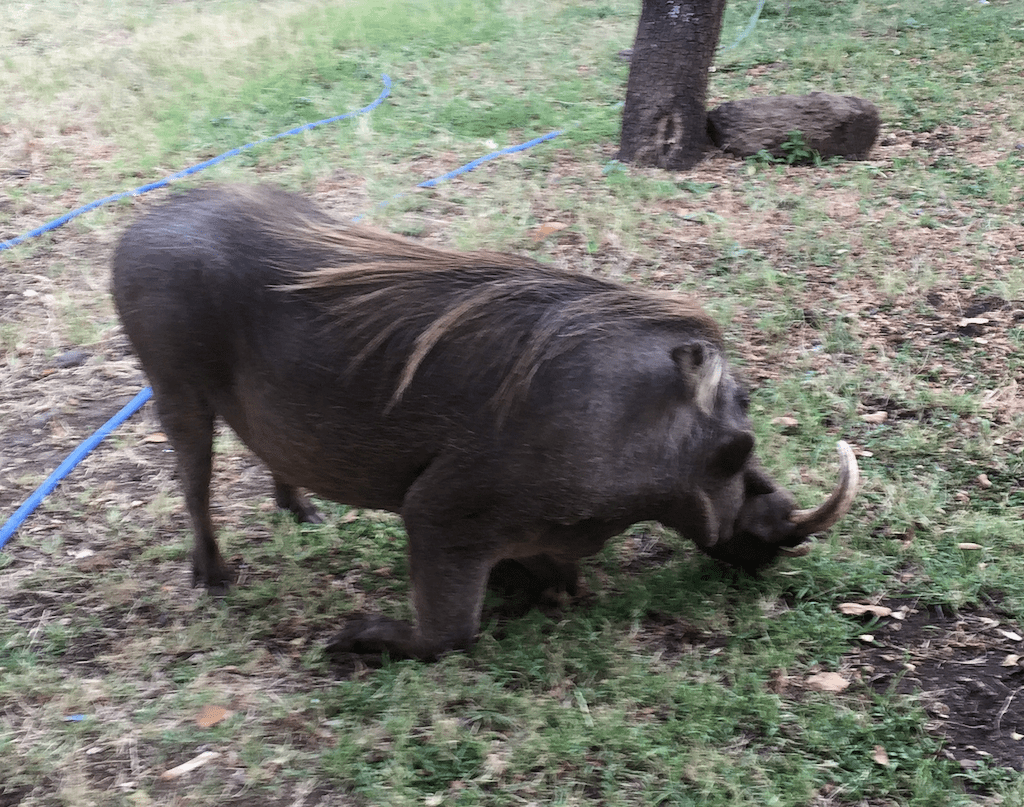
Pork chops were off the list because neither Orthodox Christians nor Muslims eat pork. You couldn’t even get bacon. Because of the growing Chinese influence there are now a few places in Addis where you can buy pork, but it is still not a common meat and to many an absolute ‘no-no’,
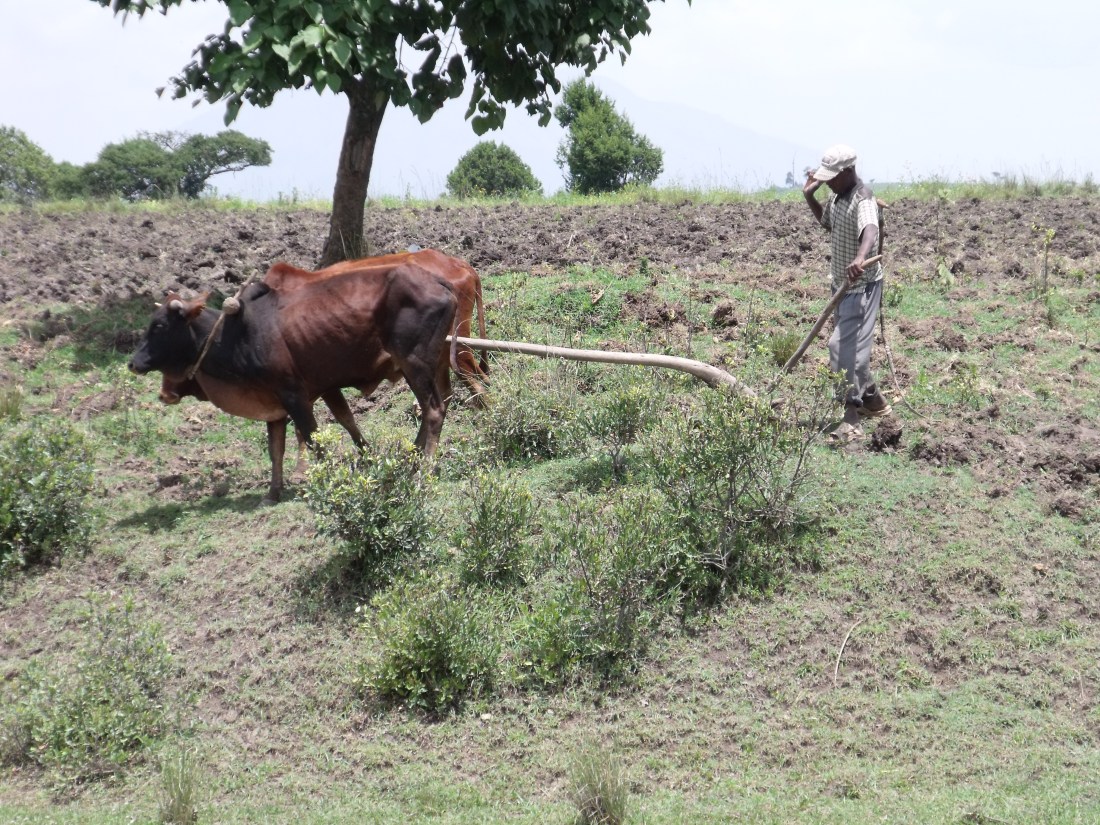
You could buy beef which was hanging outside the butcher shops. The butchered halves hung there for all to see. The animals were killed early in the morning and it was good to get there early before there were too many flies. You could point to the piece of meat you wanted and they cut it off. You needed to cook it well, preferably in a pressure cooker. It seemed as if most animals were killed after a long life of pulling a plough!
Chickens (doro) were bought live. They were highly prized as meat. They were in the local custom killed in, to me, a rather gruesome way by sawing through the neck. We, as you probably know, kill them by placing their necks in a convenient place and with a swift swing of an axe chop off their heads, before hanging them up to drain out their blood. Again by local custom the bird is cut into eleven pieces and made into a very spicy meal. The favoured person is usually handed a piece called, when translated, the horse-rider, the meat on the breast bone.
If you wanted sheep meat you went to the market and bought a sheep. You could never buy lamb or mutton or hogget at a shop. You took the sheep home and killed it and prepared the meat there. African sheep don’t look like ours in Australia. They look like goats, but whereas goats ears and tails go up, those on sheep hang down. Goat meat also can be bought on the hoof, in the same way.
Being brought up in the south of Australia, in our childhood and youth, when not eating rabbit, we ate sheep, usually labelled lamb. On the farm they were aged by their teeth, in the shop by the butcher’s choice.
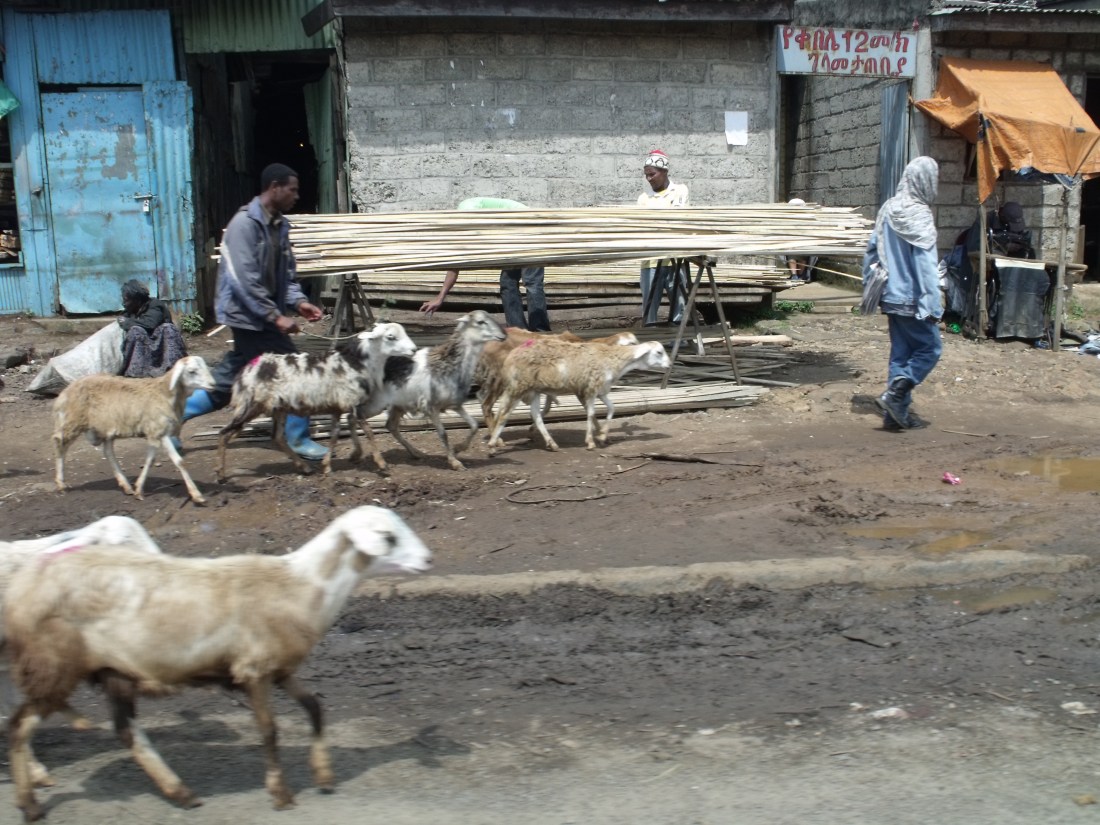
One weekend we decided we’d like some sheep meat. So the teenagers who were living with us A house full of teenagers. and I went to the local market on the Saturday afternoon and after a lot of haggling bought one. As a white person we financially suffered racism. Everything was a bit dearer for us. So I sent the boys out to suss out the best prices. I fooled myself if I thought this would work as I was well known in the town, as was the fact that the boys lived with us! I personally had no intention of killing it. Ato (Mr) Kassa, our gardener could do that on Monday, I knew that he’d be happy to do that for a share in the meat as a gift.
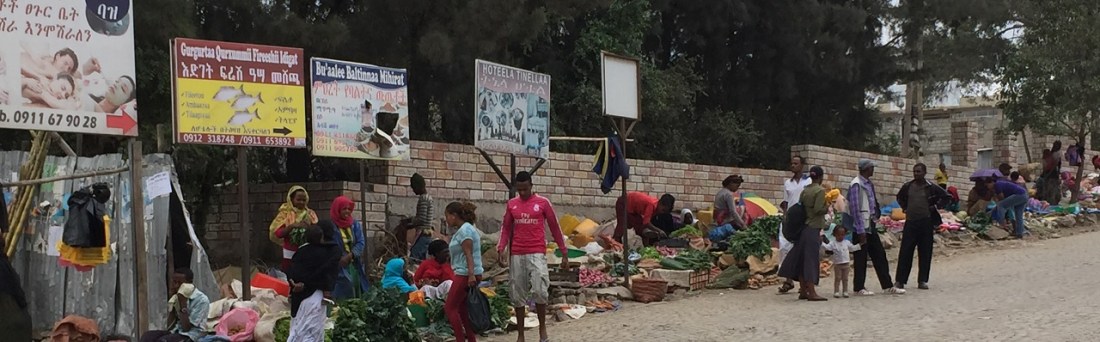
Here I ran into an unexpected hurdle. Sheep are not kept outside in countryside Ethiopia, they sleep in the house, I think for fear of thieves or hyenas. At any rate, in the evening we tied it up in the garden but it didn’t like that at all. It baa-baa-ed to the point of driving us near to insanity. We had to end up clearing a space in the inside laundry, and inviting him in. After that peace reigned until…..
Monday when he was dealt with by Kassa. He was a very tasty and the much enjoyed centre of a number of meals.
Interestingly, the intestine is a favoured piece of the kill and locals make it into nice spicy dish. Kassa and his family enjoyed it as part of his gift. On the whole I don’t like tripe.
Dominic Cartier
In medical English we have the word digit which describes either a toe or a finger. In Amharic the word ‘taat’ which some scripts write as ‘xat’ because the letter x is an explosive ‘t’, our ‘x’ is written ‘cks’. The big toe is called the ‘owra xat’. ‘Owra’ is the added adjective to differentiate a rooster from a hen. It is an ‘owra doro’. So maybe we could call it the ‘rooster toe’.
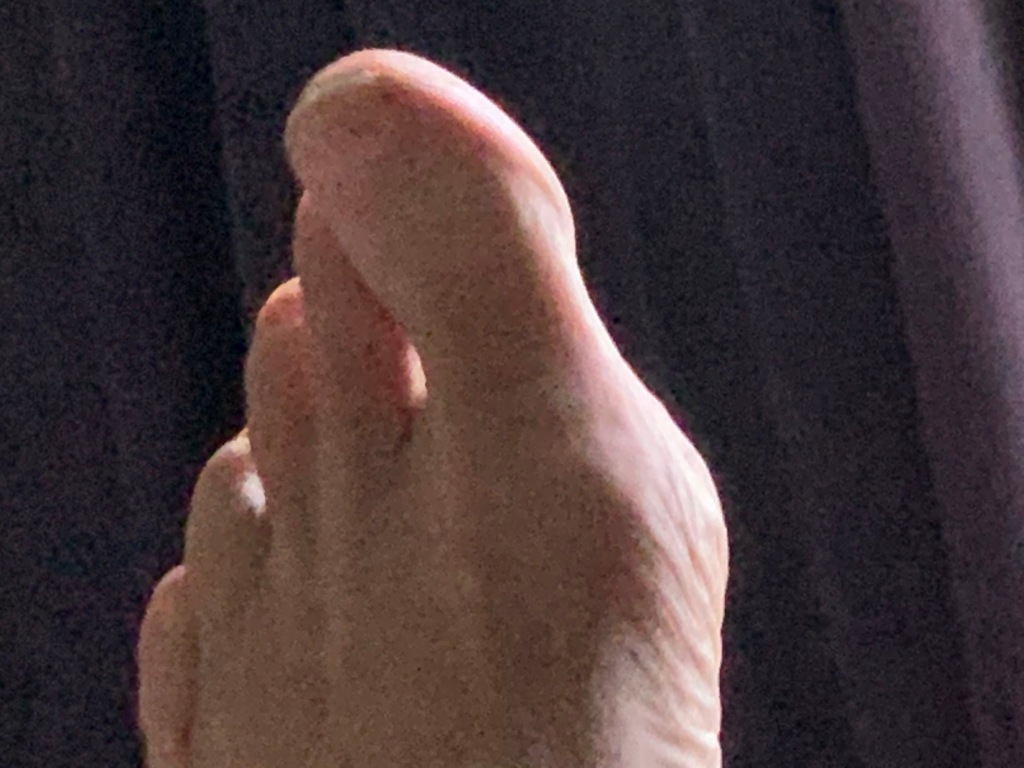
Certainly the commonest thing with their big toes, in the West, for children, apart from getting their nails cut, are IGTN – or ingrown toenails. When I was in my early sixties I was not able to get a visa into Ethiopia and had a practice here in Australia. I did a few operations under local anaesthetics in my rooms. Things like small skin lesions, carpal tunnel blocks, vasectomies and IGTN.
Pre-teens and early teenagers don’t know what old really means. They think if you’re married and have a couple of kids then you’re ‘old’. One day I was operating on a young girl’s IGTN under local. She was a brave girl. We got talking and she mentioned this old man in some context for which, to me, ‘old’ didn’t seem correct. So I asked her what was the guys age – ’about 35’ she said. I said, ‘then what am I?’ The answer was that I wasn’t old. So I offered to do her other toe free if she wanted me to. She had the grace to laugh but one was enough for her, and besides, there wasn’t anything wrong with her other big toe.
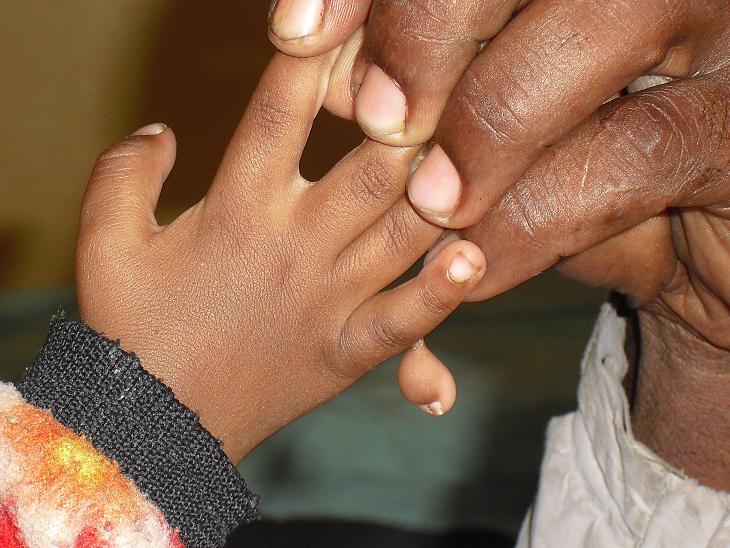
Over the years one has seen a number of big toe issues. Bunions; fractures; cuts; dead bones in leprosy patients and rat bites; gout, arthritis, pyoderma gangrenosum ; cancer; dead toes particularly in diabetics or as a part of much more extensive gangrene in vascular disease. In Ethiopia we often saw people with six toes, usually on the outer side of the foot but not always. Some extra digits were very simple to remove, some more difficult. Why would you want to do anything? For me it was simple – because the patient wanted it. Usually it had something to do with foot wear.
Usually the big toe is longer than the others. Once I operated and shortened the second toe of a state AFL player because every time he played he developed a blister or shallow ulcer on the end of his second toe. It helped him a lot.
It reminds one of the saying – ‘I complained about having no shoes until I saw someone who had no feet. And I stand amazed at what some can do with their feet when they have no hands. They play the piano, tie up their siblings’ shoelaces, in fact, live a full life. And have you seen that guy with no hands nor feet but a world renowned speaker? Amazing!
Going back to my young girl’s statement, I wonder what old really means. Do I measure it in chronological or physiological terms; human years, historical years or eternal years? At over 80, I still feel like a young man even though living in a wrecked old frame.
Dominic Cartier
 Heated Stew