Easter this year.

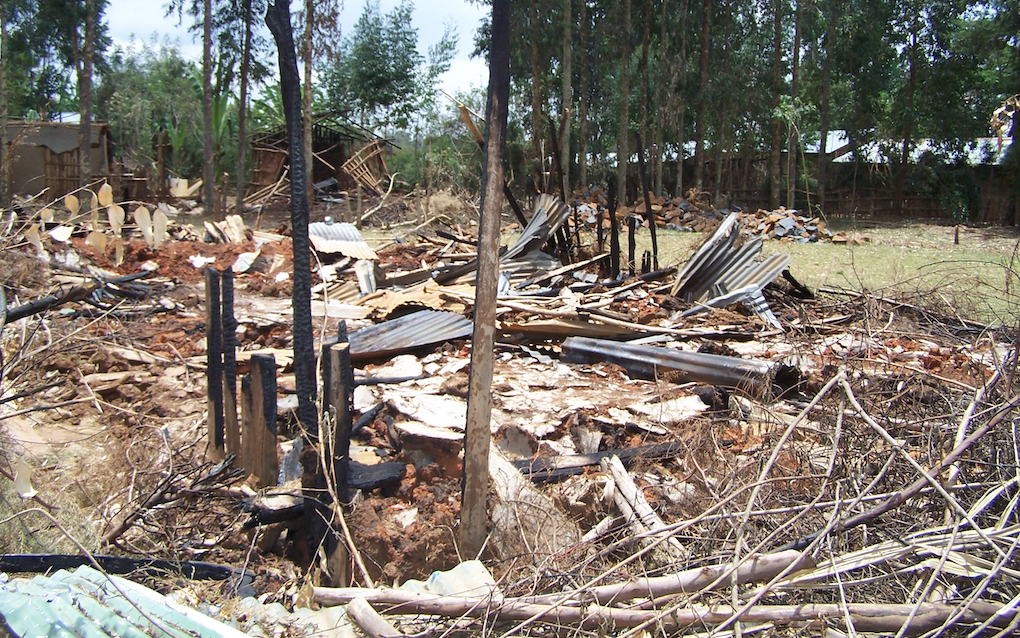
burnt churchThere was a stage when the local church head office had to deal with 4,000 displaced people. Displaced because nearly 100 churches and many homes had been burnt down by a group of fanatics. The University abuted the church property and our home was one that had previously been built for foreigners working with them. We weren’t directly involved until a friend in Australia sent a sizeable gift which he wanted us to equitably hand out to the needy; with stipulations we did it through the church heavies.

Ministers of every Christian denomination must feel that Easter in their calendars has been dealt a similar blow this year. The people got together and rebuilt their churches and I was asked to be present at the re-opening of several of them. They were rejoicing – because having suffered for their faith they were now in better shape than before. In one instance they even built a school for the children of their persecutors!

rebuilt church

Easter means something to everyone! Travel, holidays, sport, religion.

There are always school and maybe university breaks. There are major sporting events; many go camping; it is a major holiday period.

The breaks have extended this year into areas where no one wanted them to go; people stood down from their jobs; many businesses, leisure spots, sporting events being closed! No travel permitted! And it’s no holiday at all, with the 2 person and 1.5 metre rules in place. There are resultant extreme financial problems for many.

This is all very sad, and affects us all, some very severely. It is not to be belittled, but it’s not the fault of Easter. It’s THAT virus!

Let’s remember, however, that Easter was not originally meant to be primarily a ‘holiday’ but a ‘holy day’. A time free from work, an opportunity to worship. The heart of ‘Easter’ is a religious thing. I think many will miss the services of the Holy (Passion) week – Maundy Thursday, Good Friday, Easter Sunday. We’re told that many go to church just at Easter and Christmas. Well this year they’ll miss out on Easter.

When I was young I wondered why they said that Jesus rose on the third day. He died Friday and Sunday is only 2 days later. It all made sense after I went to Africa. If I made the mistake on, for example, a Tuesday of telling a patient to come back in 14 days (there was no word for a fortnight), they always came back on the Monday. If I said come back for a check in 4 days they always (to my counting) came back in 3. You had to get used to it! Today was counted as day 1. Thus Friday, He died day 1, Saturday, in the grave day 2, Sunday – He rose on the third day.

The government can, and probably correctly, has cancelled public gatherings. They cannot cancel history, so our house will meditate and rejoice!

And I remember those in other lands who all year, every year, face Governmental restrictions and persecution, and I am glad that I can at least celebrate without fear in my own home.

Damien Cartier

Further comments on the 3 Teenagers – Tadessa

M family home

(The house complex above was often the set up of a polygamous family. The Husband had the bigger house and each of his wives a smaller one.)

Tadessa was the second of the 3 teenagers who became part of our home -see  A house full of teenagers.    The first, Mesfin, was dealt with in Follow up on Mesfin of the ‘3 Teenagers’

Tadessa was much gentler than Mesfin but just as studious. I remember how they were taught English in High School. There were sentences with a or maybe two spaces, followed by a list of alternate words or phrases to put in the spaces. For instance there may have been a verb in several tenses and they had to choose the right one. In the evenings he would discuss the alternatives with my wife. Unlike me she is good at English. I remember him more than once stating that her answers had been marked wrong. When he had commented to the teacher that he lived with people whose first language was English and that he had checked his answers with them he was told that they obviously didn’t know English very well.

With Mesfin he was sent to school in Addis and went onto tertiary studies. He studied accountancy and administration. When they were leaving our area to go for further schooling in Addis their church friends gave them a party. It was joyous and memorable. Memorable to me in several ways – the music and singing (not the canned variety) were great, and  the retelling of shared experiences was hilarious  but, outstanding in my mind was that the catering was only dry bread and water; and they all appreciated it. My wife and I, invited as their ‘parents’ were spoiled. We had a coke and a fanta!

He worked with the training school attached to the Hamlin Fistula Hospital. Then with Samaritan’s Purse. He was in the Finance Department of the Korean Hospital in Addis Ababa. Now he is CEO of the work in Ethiopia of an American Mission.

This mission has built and runs a school for 1400 children in a poor area about 150 km. They provide 2 meals a day for the students. He still lives in the capital. From there he deals with the American heavies in the USA and the Government heavies in Addis, frequently travelling to the school to oversee its running. At the mission’s request he is planning to start a second school.

Over the years he has worked as a go-between for us dealing skilfully with government departments, whereas we would have bumbled our way through, and often have failed.

Perhaps the supreme example of this was when, after a 2 year battle to adopt our second Ethiopian son, he solved the question by marching into the senior officer in the case and saying “you know every legal requirement has been met. You’re only waiting for a bribe and this family don’t bribe. Say ‘yes’ and the case is finished. Say ‘no’ and we’ll take you to court”. He marched out of the office. Two days later he was called in to collect the signed papers. It is of interest that in the preceding few weeks a number of officials from other departments had been sacked for taking bribes.

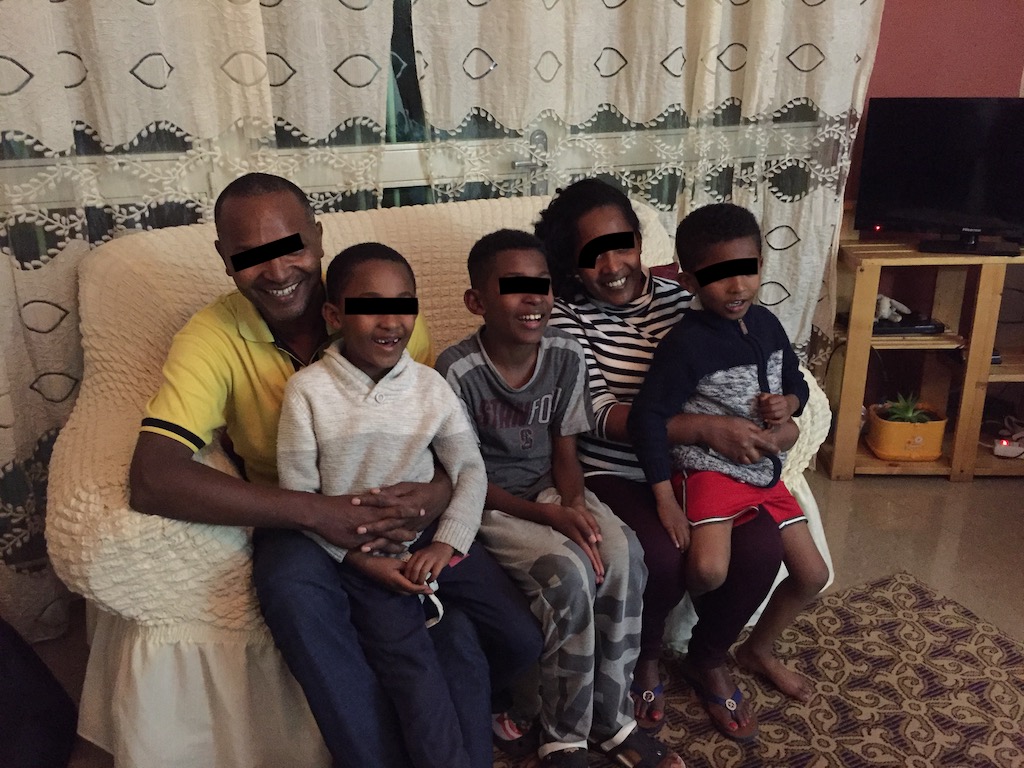
He is married with 3 lovely boys. His wife is a nurse.

I’ve lent him money which he is repaying in part by helping educate a number of other children.

Tadessa family

Dominic Cartier

A brush with cholera

African sunset

I have in my blog An introduction to Life in Africa talked about my experience of arriving in Africa with a cholera vaccination one day over the 6 months protection promised, that is out-of-date by one day. I don’t think that I’ve had an injection for cholera since, rather relying on hygiene. The vibrio which causes cholera is present in the faeces of a sufferer and either spread by direct inoculation on soiled objects (eg hands or flies) or drinking water with infected faecal material in it.

Thus toilet paper, hand washing and boiling or sterilising affected water are the main protective mechanisms.

On the other hand without toilets or clean running water spread is rapid in developing countries.

People defecate near a water supply (eg creek), some faeces may spill into the creek or people wash their hands or bodies in the water. Further down the waterway someone drinks and ‘boom’.

Cholera gives extremely severe diarrhoea and a patient can die within 12 hours from dehydration.

Our home and hospital water supply was from the local creek.

As a medical service we were inundated with cases.

We set up 2 extra ‘hospitals’ one by ‘acquiring without consent’ a newly built un-occupied house in a village from which 14 people had died during the day before we set this temporary ‘hospital’ up. It was much bigger and better than the surrounding kraals with 5 rooms. We had to deal with the owner a few days later! The people were so terrified that they refused to bury their dead and left them out to be eaten by the hyenas. There we also set up a vaccination program under the shade of a huge tree not far away from the village. In this house/hospital patients lay on the floor as we had no beds and their bowel actions were handled by bed pans. The nurse and helpers who ran it deserved gold medals! No one died there, very serious cases were transferred to our major hospital. There are special cholera beds with holes under the buttocks with canvas funnels below to collect the massive diarrhoea in largish containers. We had none of these in either hospital so there was much work with very frequently used bedpans.

large tree

The second hospital was a large tent, usually used for celebrating weddings or funerals, set up next to our main hospital. The main hospital still had plenty of work. There were about 40 beds in the tent. A young 17 yo visiting Australian, while not medically trained, supervised the night watch. The local workers tended to find a place to sleep if there was a hiatus in work. The young man kept an eye on the IV drips and status and woke the workers if/as necessary.

We setup a vaccination program using senior primary school students to perform the intracutaneous injections. (A number of our primary school students were late teenagers or young adults who had previously had no education. They were seeking a basic 3R education.) This intracutaneous route was chosen because the volume of vaccine used was much smaller, and we had a limited supply. These older students were used to responsibility; and learned fast. This program was supervised by an American physiotherapist and they carried out over a hundred thousand injections in a number of sites around the area over 3 weeks. The tribal population was about a million.

hosp bed 2

The bed above was typical of those being used in our University hospital in 2017. They are much better than what we had in our cholera tent!

Fortunately we were 2 doctors there at the time. The advantage was tempered a bit, however, as one of our sons was born during this time, a bit premature and fairly heavily jaundiced. My wife took him to the capital for advice and as an escape from the environment.

The government and WHO were very generous providing adequate antibiotics and a plane load of IV fluids. The plane landed in a field near the hospital.

We treated over 900 as inpatients within a month, without a death among those who arrived at the hospital alive. In addition those with milder symptoms were treated as outpatients within the hospital grounds.

Treatment was urgent and intense but in the appropriately treated the cure was rapid. The antibiotic we had was long acting sulphur. Patients needed sometimes up to 30 litres of IV fluid in the first 24 hours (keeping up with the diarrhoea) but after that it lessened quickly and we made them drink water from which the dirtiness had been settled out with alum and sterilised with chlorine. We had difficulty getting them to drink our ‘clean’ water. They said it had no taste. We bought 3 different cake colourings (red, blue and yellow) and coloured the water, lying I guess, and insisting that it was powerful medicine. In reality that was true for the dehydrated.

An interesting experience. I was went through a smallpox endemic at another time. 

Dominic Cartier.


Continue reading “A brush with cholera”

Follow up on Mesfin of the ‘3 Teenagers’

boy's home
The home in which Mesfin grew up.

Mesfin, Tadessa and Solomon all have fascinating stories beyond what was written in A house full of teenagers. Mesfin was the first to come to us.

In countryside areas of Ethiopia birth certificates were not issued at that time when children were born. You could buy them and supply the details which you chose to have put on them. So it is a guess as to how old Mesfin was when he came to live with us. He didn’t know his birth date either, it not being the custom to celebrate birthdays; so we appointed my father’s birthday as his and guessed that he was maybe 16 or 17. I am writing this on his ’41st’ birthday! He was in grade 9 in the local high school. Schooling was for half a day – one group of students had classes in the morning and a second group had class in the afternoon. They alternated from morning to afternoon weekly. There were so many kids to be educated, and this arrangement allowed each school to double its intake! Mesfin was bright. He had a cocky, cheeky nature but was delightful and wanted to learn. His English became very good with an Australian accent. Continue reading “Follow up on Mesfin of the ‘3 Teenagers’”