


The administrative parts of the University were well built. The hospital was an old Mission Hospital and not up to date or adequate.




Dominic Cartier
Dominic Cartier

We travelled for the first time to Shashemane in April 1968. We had arrived in Ethiopia 16 days earlier and we were taken down the 250 Km ride by a couple of missionaries who were travelling further south to their station (another hospital 120Km on the road leading to Kenya). It was good to hear of their experiences in Ethiopia where they had been for many years. Our mission station was big and very busy. There follows an ‘Excerpt From: Barry L Hicks. “Have Scalpel – Will Travel.” Apple Books.’
We arrived in Shashemane at about three o’clock in the afternoon and were taken straight to the home of Dr Lindsay and Mrs. Marion McClenny, some of the loveliest people one could ever wish to meet. They were due to go on furlough in a few weeks and we just had that time to be inducted into the work. As we arrived and were introduced Lin, usually called ‘Mac’, told me that he had a patient he wanted me to see urgently – but we had time for a cup of tea first. (Tea provided by Americans! And hot tea at that.) By 3.30 we were in the hospital and we eventually got home for the evening meal at about 11.30.
In the mean time we had seen the patient he wanted me to see – a teenager with a right sided large bowel obstruction due to a huge caecal tumour – and two obstetrical emergencies both of whom needed surgical intervention; we had also seen a couple of other lesser emergencies. Mac dealt with the obstetrical cases – a high forceps and a Caesarean – and I did the right hemi- colectomy for the teenager.
I knew that I was going to have to deal with the obstetrical and gynae procedures as soon as he left and so was keen to learn all I could before he departed on furlough. The specimen of bowel removed from the girl, containing the large mass in the caecum, was sent to the only pathology laboratory available in Ethiopia at that time at the Black Lion Hospital in Addis Ababa. The report arrived exactly one year to the day after the operation. It was fortunate that the patient was not kept in the hospital until the report came back. Typical of patients in countryside Ethiopia, she never returned for any follow up anyhow, so I don’t know what happened to her in the long run.
Very early in my stay there I was asked to review the seven hundred inpatient lepers. I think that I was the first one with any specific leprosy surgical training who had ever been there and if not the first then certainly the first for a long while. In India I had learned a lot of reconstructive procedures and doing this review I had the twofold objective of finding those who could be helped by surgery and to discharge those who did not require inpatient therapy. Thinking about long term hospitalisation had changed rapidly in the few years prior to this period of time.
On the first count I found few who wanted surgery, basically because as farmers they valued strength in their hands above the restoration of the finer movements such as those used in writing – the majority couldn’t write in any case. Sadly also they were valued in their families because of the loss of sensation which allowed them to lift hot things, such as cooking pots, off the fire without pain. Many of them, although the infectious element of their disease had been cured, were left with marked deformity and shortening of their fingers.

Dominic Cartier

I am, I guess, getting a bit lazy with the hot, muggy weather and the aging process. So what I am doing today, and may continue to do for a while, is posting a segment of Chapter 20 from my book ‘Have Scalpel Will Travel.
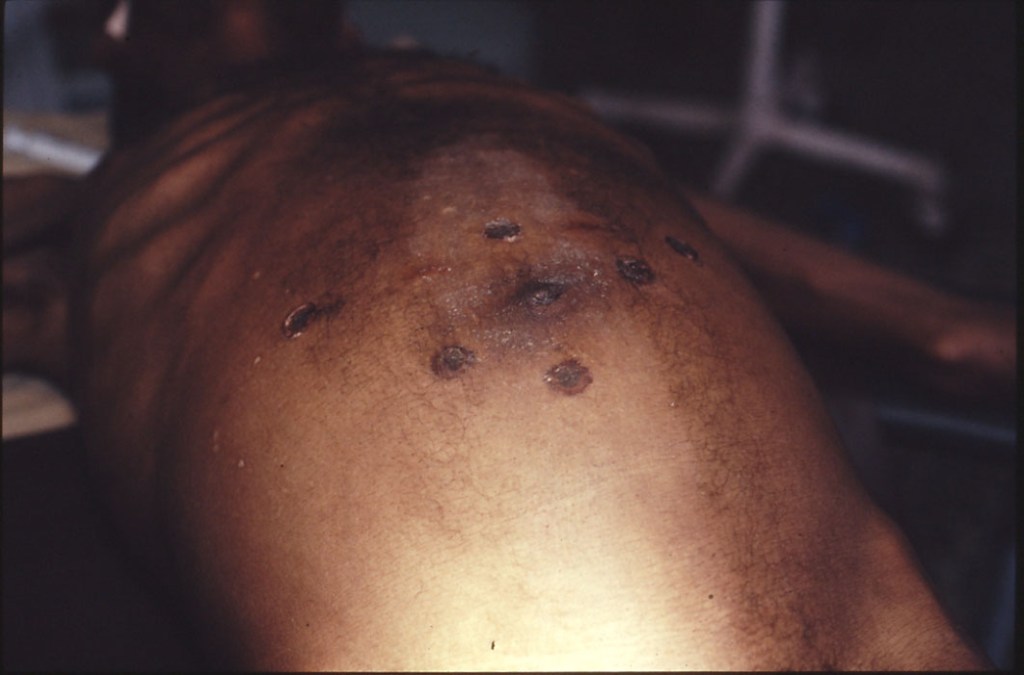
The chapter is entitled ‘A Different Culture’. I was working on a Mission Station as a Surgeon, which was a full time job. But soon I discovered that people had to be assessed and treated taking into account different things. One of these was their religion. For instance i) the dietary requirements can cause real problems treating a post operative case during Ramadan or ii) the strong religious commitment of some created unwillingness to be seen for examination particularly by a foreign infidel iii) There was a very high incidence of low large bowel obstruction due to volvulus and in treating this certain procedures, of necessity, needed the creation of a colostomy. This stopped them going into the mosque to pray. Sometimes they chose to die, although with experience we were able to reduce the incidence of needing a colostomy. This led to one of my areas of disagreement with the Surgical Department in Addis. I am delighted that my way has won the day all over Ethiopia by this time. As seen in the picture below patients, they often presented with infected burns on their abdomens – burnt to try and drive out the evil spirits causing the problem. Or often the patient had drunk the blood of an animal sacrificed to appease the spirits causing the problem. These last two situations were seen because of the animist background of the community.
My book is an ebook, presented through Smashwords. The author is Barry Hicks and you’ll have to decide if this article or the ebook is written under a pseudonym. It is easily found on internet by typing in Smashwords.com Have Scalpel Will Travel. Memoirs of an Older Surgeon. It’s cheap and I think an interesting read; you may or may not agree on that! There are no gruesome pictures, although I have many!
Following on from yesterday’s post, here are several more Ethiopian proverbs from the list my wife laid on my desk…
No explanation comes with them but I think the meanings are pretty universally understood. I just imagined, after maybe a family evening dinner or sitting around a BBQ on the weekend, putting them up for a family discussion. Sadly our kids are all grown up and flown the coop, but with them as late pre-teens or teenagers I think we could have had some interesting discussions.
If you try it let me know how it goes.
Dominic Cartier
My wife is a hoarder. This doesn’t help when you live in a smallish house and are trying to downsize, but today she lay several old papers in front of me. One of them was a list of Ethiopian proverbs. I’ve a bit of interest in proverbs at the moment as in another blog I’m writing daily posts alternating roughly weekly between the book of Proverbs and the book of Luke from the Bible. It is under another name and the title of the blog is ‘As i read it! – Plainly understanding the Bible’. You can just use the following link – http://as-i-read-it.com
‘After the hyena has gone, the dog barks’. The interpretation of a proverb is meant to be pretty clear but leaves a little room for different opinions. Here I think it means that you are gutless if you stay silent when danger is near. What do you think?
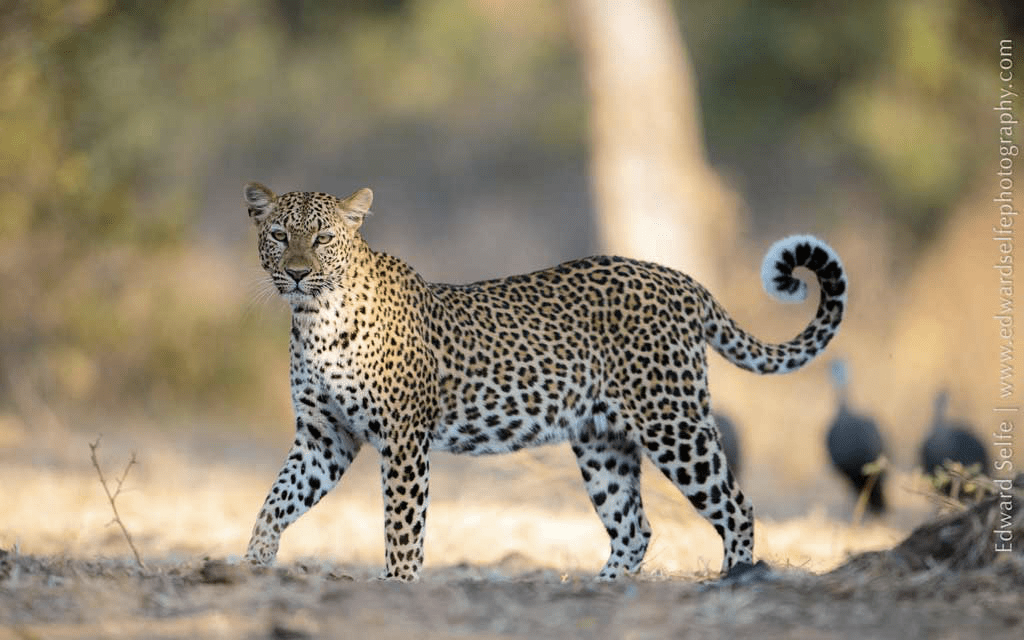
‘Don’t catch a leopard by the tail, but if you do – don’t let go.‘ as concerned with leopards this is good advice. It is isn’t going to be easy for a leopard to get at you if you hanging on to its tail for grim life. Better not to have touched it at all. And I translate it to mean in life that you’re not advised to challenge a problem issue until you are prepared to chase it to the end. And it may be a very uncomfortable time. Avoid it – unless you are are sure that you want to challenge this person or issue. Again I ask, what do you think?
‘One who plants grapes by the roadside and one who marries a pretty wife share the same problem!’ Grapes are tasty but planted by the roadside are going to be tempting to every passer-by. You’re going to place you wife in the eyes of the public and her looks make her as tasty as grapes. I don’t think that the advice is to marry ‘ugly’, but to earn her faithfulness.

Enough for one day.
Dominic Cartier
 Heated Stew